


Resistance Welder: Precision and Efficiency in Modern Manufacturing
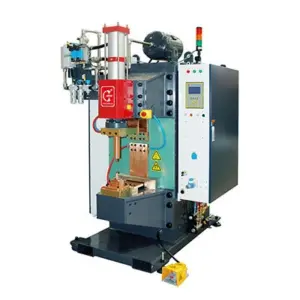
In today’s fast-paced manufacturing landscape, precision, efficiency, and reliability are non-negotiable. For OEMs, automation integrators, and factory decision-makers, a resistance welder has become an essential tool to meet these demands. From automotive assembly lines to heavy industrial fabrication, resistance welding offers a controlled, repeatable, and high-speed solution for joining metals.
Heron Welder, a global leader in industrial welding equipment, provides advanced resistance welding machines tailored for modern manufacturing needs. This guide explores the fundamentals, applications, and best practices of resistance welding, helping manufacturers optimize productivity while ensuring consistent quality.
What is a Resistance Welder?
A resistance welder is a type of welding machine that joins metal parts by applying pressure and passing a controlled electric current through the workpieces. The process generates heat due to electrical resistance at the interface of the metals, causing them to fuse together. Unlike traditional welding methods, resistance welding does not require filler material or external heat sources, making it faster, cleaner, and highly repeatable.
Key types of resistance welding machines include:
-
Spot Welders: Ideal for joining sheet metal at discrete points. Common in automotive body assembly.
-
Projection Welders: Focus current through pre-formed projections on the metal surface for localized welding.
-
Seam Welders: Produce continuous welds along a joint, perfect for tanks, drums, and piping.
-
MFDC & Capacitor Discharge Welders: Offer precision and control for thin metals or specialized applications.
Heron Welder’s portfolio includes all these machines, designed with high reliability, energy efficiency, and automation compatibility.
How Resistance Welding Works
Resistance welding relies on three critical parameters:
-
Current: High electric current passes through the metal interface, generating heat due to electrical resistance.
-
Pressure: Electrode force holds the metals together, ensuring proper fusion.
-
Time: The weld duration must be optimized to prevent overheating or weak joints.
The synergy of these parameters produces strong, consistent welds. Advanced Heron controllers allow precise adjustment of current, time, and force, ensuring repeatable quality in high-volume production environments.
Applications of Resistance Welders
Resistance welding is widely adopted across industries that demand speed, strength, and repeatability. Common applications include:
-
Automotive Manufacturing: Spot and seam welders join car body panels, chassis components, and structural reinforcements.
-
Aerospace & Defense: Precision welds for critical components using projection or MFDC resistance welding.
-
Electronics & Appliances: Small-scale resistance welding for battery tabs, connectors, and appliances.
-
Industrial Fabrication: Seam welding of pipes, tanks, and sheet metal assemblies.
Heron Welder machines are engineered to handle diverse metals, including stainless steel, aluminum, and coated sheets, supporting manufacturers with flexibility and high throughput.
Resistance Welding vs. Other Welding Methods
Understanding how resistance welding compares to other methods helps manufacturers choose the right technology:
| Welding Method | Speed | Heat Affected Zone | Automation Friendly | Filler Material Needed |
|---|---|---|---|---|
| Resistance Welding | Very High | Minimal | Excellent | No |
| MIG Welding | Moderate | Moderate | Moderate | Yes |
| TIG Welding | Low | Minimal | Limited | Yes |
| Laser Welding | High | Very Minimal | Excellent | Optional |
Resistance welding offers unmatched cycle speed, low maintenance, and excellent suitability for automated production lines, making it a preferred choice for high-volume manufacturing.
Best Practices for Resistance Welding
To maximize the performance of a resistance welder, manufacturers should follow these best practices:
-
Proper Electrode Maintenance: Clean and dress electrodes regularly to maintain consistent current flow and weld quality.
-
Optimized Parameters: Fine-tune current, pressure, and welding time based on metal type and thickness.
-
Workpiece Preparation: Ensure surfaces are free of oil, rust, or coatings that can affect electrical resistance.
-
Routine Calibration: Periodic calibration of machines ensures repeatable, reliable welds.
-
Safety Compliance: Use protective equipment and automated safety interlocks to reduce operator risk.
Heron Welder supports customers with detailed process guidelines and technical training to help engineers implement these best practices efficiently.
Why Choose Heron Welder?
As a global provider of industrial welding solutions, Heron Welder stands out by offering:
-
Comprehensive Resistance Welding Solutions: Spot, projection, seam, MFDC, and capacitor discharge machines.
-
Automation Integration: Easy integration with robotic and automated production lines.
-
Custom Solutions: Machines tailored for unique manufacturing requirements.
-
After-Sales Support: Technical support, maintenance services, and spare parts availability worldwide.
Heron combines engineering expertise, innovative design, and global service capabilities to help manufacturers achieve higher productivity, better weld quality, and reduced operational costs.
Frequently Asked Questions (FAQs)
Q1: What metals can be welded using a resistance welder?
A1: Resistance welding can join a variety of metals, including steel, stainless steel, aluminum, and coated sheets, depending on machine type and settings.
Q2: Is resistance welding suitable for automated production lines?
A2: Yes. Resistance welders, especially those from Heron, are designed for full automation, enabling integration with robotic arms and conveyor systems.
Q3: How does a resistance welder differ from a laser welder?
A3: Resistance welders use electrical current and pressure to join metals at specific points, while laser welders use a focused light beam. Resistance welding is typically faster for high-volume sheet metal production.
Q4: What maintenance is required for resistance welders?
A4: Regular electrode cleaning and dressing, machine calibration, and inspection of cooling systems ensure optimal performance and weld quality.
Q5: Can Heron customize resistance welding solutions for specific applications?
A5: Absolutely. Heron specializes in custom solutions tailored to metal type, production volume, and automation requirements.
Conclusion
A resistance welder is a cornerstone technology for modern manufacturing, offering speed, precision, and reliability. For engineers, OEMs, and automation integrators, leveraging high-quality resistance welding machines can significantly enhance productivity while maintaining consistent weld quality.
Heron Welder combines cutting-edge technology, global expertise, and tailored solutions to meet your unique manufacturing challenges. Request a quote today or consult with Heron experts to explore customized resistance welding and automation solutions for your factory.

 Arabic
 French
 Spanish
 Portuguese
 Deutsch
 Turkish
 Dutch
Dutch
 Italiano
 Russian
 Romaian
 Portuguese (Brazil)
 Greek
Greek
 Bengali