


Bean-to-Bar Chocolate in India: What Makes Craft Chocolate Different?
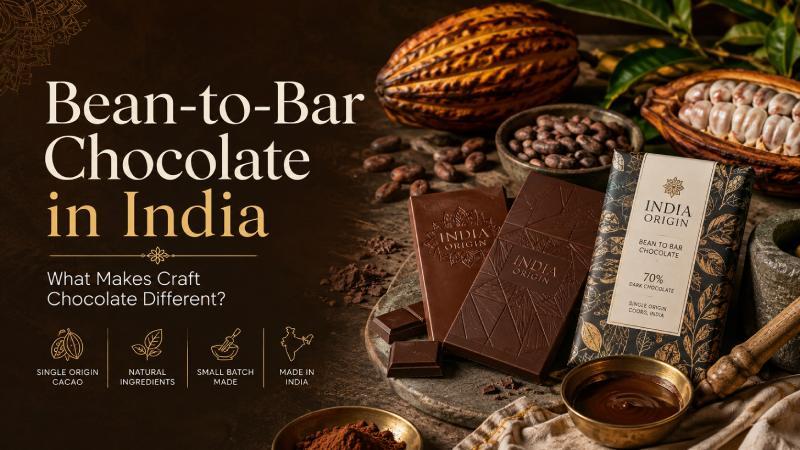
Chocolate is something most of us have grown up enjoying, but very few people stop to think about how it is made. Behind every chocolate bar is a long journey that starts with cacao beans and ends with roasting, grinding, refining, tempering, and moulding. In recent years, Indian consumers have started paying more attention to this process, giving rise to a growing interest in craft and bean-to-bar chocolate.
Unlike mass-produced chocolate, craft chocolate usually focuses on ingredient quality, cacao origin, flavour development, and small-batch production. This is why people searching for bean to bar chocolate in India are often looking for more than just sweetness—they want to understand where the cacao comes from and how carefully the chocolate has been made.
The difference can be noticed in everything from texture and aroma to the natural flavour notes in the finished bar. Some chocolates may taste fruity, nutty, earthy, floral, or even slightly spicy depending on the cacao variety, growing region, roasting style, and production method.
What Does Bean-to-Bar Chocolate Mean?
Bean-to-bar chocolate refers to chocolate made by a producer who controls the entire process from cacao beans to the finished chocolate bar.
Instead of buying ready-made chocolate couverture and simply melting or reshaping it, bean-to-bar makers work directly with cacao beans. They sort, roast, crack, winnow, grind, refine, conche, temper, and mould the chocolate themselves.
This gives the maker much greater control over the final flavour.
The process also allows producers to highlight the characteristics of cacao from a particular region or farm.
Why Craft Chocolate Is Different
Craft chocolate is often produced in smaller batches with greater attention to detail.
Large-scale chocolate manufacturers usually focus on producing a consistent flavour across millions of bars. Craft chocolate makers, on the other hand, often celebrate differences in cacao origin, harvest, roast level, and formulation.
This can make every bar feel more distinctive.
Rather than trying to create the same flavour every time, craft chocolate makers may allow the natural characteristics of cacao to become part of the experience.
The Importance of Cacao Origin
Much like coffee or wine, cacao can develop different flavour profiles depending on where it is grown.
Climate, soil, rainfall, fermentation, drying, and farming practices can all influence the beans.
For example, cacao from one region may produce chocolate with fruity notes, while beans from another location may have deeper nutty or earthy flavours.
This is one reason craft chocolate makers often mention the origin of their cacao on the packaging.
Knowing where the cacao comes from helps consumers understand the story behind the chocolate.
How Bean-to-Bar Chocolate Is Made
The process of turning cacao beans into chocolate requires several carefully controlled steps.
1. Sorting the Cacao Beans
The process begins by checking the cacao beans and removing damaged beans, stones, debris, or anything that should not enter production.
Careful sorting helps maintain consistency and quality.
2. Roasting
Roasting is one of the most important steps in chocolate making.
Heat develops the flavour of the cacao while reducing unwanted moisture and acidity.
Different roasting temperatures and times can produce very different results.
A lighter roast may preserve delicate fruity flavours, while a deeper roast may create stronger roasted or nutty characteristics.
3. Cracking and Winnowing
After roasting, cacao beans are cracked into smaller pieces.
The outer shell is then separated from the inner cacao nibs through a process called winnowing.
The cacao nibs are the part that will eventually become chocolate.
4. Grinding
The nibs are ground until their natural cocoa butter is released.
This gradually produces a thick liquid known as chocolate liquor or cocoa mass.
Despite the name, chocolate liquor does not contain alcohol.
5. Adding Other Ingredients
Depending on the recipe, ingredients such as sugar, cocoa butter, or milk may be added.
Dark chocolate often contains fewer ingredients than milk chocolate, allowing the flavour of cacao to remain more noticeable.
Craft producers may also experiment with spices, nuts, fruit, coffee, or other natural ingredients.
6. Refining and Conching
The chocolate is refined to reduce particle size and create a smooth texture.
Conching then mixes and aerates the chocolate for an extended period.
This stage helps improve texture, aroma, and overall flavour balance.
7. Tempering
Tempering involves carefully heating and cooling the chocolate.
This controls the formation of cocoa butter crystals, helping the finished chocolate develop a smooth appearance, firm snap, and stable texture.
8. Moulding and Packaging
Finally, the tempered chocolate is poured into moulds and allowed to set.
Once removed, it can be packaged and prepared for sale.
For small-batch producers, even packaging may reflect the identity of the cacao origin or flavour profile.
Craft Chocolate vs Mass-Produced Chocolate
The biggest difference between craft and mass-produced chocolate is not necessarily whether one is "good" and the other is "bad."
They simply follow different approaches.
Mass-produced chocolate is designed for consistency, affordability, and large-scale distribution.
Craft chocolate usually focuses more heavily on cacao quality, origin, flavour, and production detail.
Mass-market products may use highly standardized formulations to ensure the same taste across different batches.
Craft chocolate can be more experimental.
One batch may emphasize citrus notes, while another may showcase caramel, coffee, or berry-like flavours.
Fewer Ingredients Can Mean More Flavour
Many craft chocolate bars use relatively simple ingredient lists.
A dark chocolate bar, for example, might contain only cacao and sugar.
This simplicity places more emphasis on the quality of the cacao.
When fewer additional flavours are used, the natural characteristics of the beans become easier to notice.
That is why craft chocolate tasting often feels different from eating a conventional candy bar.
The goal is not only sweetness but flavour complexity.
Why Small-Batch Production Matters
Producing chocolate in smaller quantities gives makers more control over each stage.
They can adjust roasting times, refining periods, recipes, and flavour combinations depending on the cacao being used.
This flexibility makes experimentation easier.
It can also allow producers to maintain closer oversight of the production process.
For chocolate lovers, small-batch production often means discovering products that feel more distinctive and less standardized.
The Growth of Craft Chocolate in India
India's chocolate culture has changed significantly over the last few years.
Consumers are increasingly interested in dark chocolate, premium ingredients, local cacao, artisanal foods, and products with clear sourcing stories.
At the same time, cacao cultivation in regions such as Kerala, Karnataka, Tamil Nadu, and Andhra Pradesh has created opportunities for Indian chocolate makers to work more closely with domestic cacao.
This has helped build greater awareness around Indian-origin cacao.
As consumers learn more about chocolate production, they are also becoming more curious about cacao percentages, ingredient lists, origins, and flavour notes.
What Does Cacao Percentage Mean?
You may have noticed percentages such as 55%, 70%, or 85% printed on chocolate packaging.
This percentage generally refers to the amount of cacao-derived ingredients present in the bar.
Higher percentages usually mean more cacao and less sugar, although the exact formulation can vary between makers.
A 70% dark chocolate bar, for example, will generally taste less sweet and more cacao-forward than a milk chocolate bar.
However, percentage alone does not determine quality.
The origin of the cacao and the way the beans are fermented, roasted, and processed also play major roles.
How to Taste Craft Chocolate
Craft chocolate can be enjoyed slowly, much like specialty coffee.
Start by looking at the surface of the chocolate.
A well-tempered bar should generally appear smooth and even.
Break a small piece and listen for the snap.
Then smell the chocolate before tasting it.
You may notice roasted, fruity, nutty, floral, caramel-like, or earthy aromas.
Allow a small piece to melt gradually in your mouth rather than chewing it immediately.
As the chocolate melts, different flavours may develop.
Some notes appear at the beginning, while others become noticeable only at the end.
Common Flavour Notes in Craft Chocolate
Chocolate can contain a surprising range of natural flavours.
Depending on the cacao and production method, you may notice:
-
Red fruit
-
Citrus
-
Raisin
-
Coffee
-
Caramel
-
Honey
-
Nuts
-
Vanilla
-
Spices
-
Floral notes
-
Earthy flavours
These flavours do not always come from added ingredients.
They can occur naturally in cacao.
Is Dark Craft Chocolate Always Bitter?
Not necessarily.
Good dark chocolate may have some bitterness, but it should usually feel balanced rather than harsh.
Acidity, sweetness, fruitiness, and roasted flavours can all influence how bitter the chocolate tastes.
Two bars with the same cacao percentage can taste completely different depending on the beans and production method.
This is why trying chocolates from different origins can be interesting.
Craft Chocolate and Thoughtful Gifting
Craft chocolate also works well as a premium gift.
Because the bars often have distinctive flavours, elegant packaging, and stories connected to their origin, they can feel more thoughtful than standard chocolates.
They can be included in birthday hampers, festive gifts, wedding hampers, corporate gifts, or personal celebrations.
For someone interested in food, coffee, wine, or artisanal products, craft chocolate can also provide a tasting experience rather than simply being a sweet treat.
What to Look for When Buying Craft Chocolate
When selecting a craft chocolate bar, consider the ingredient list first.
Short, clear ingredient lists often make it easier to understand what you are eating.
Look for information about cacao origin, cacao percentage, and flavour notes.
You can also check whether the producer mentions roasting, fermentation, sourcing, or small-batch production.
If you are new to craft chocolate, starting with a 60% to 70% dark chocolate can be a comfortable introduction before moving to stronger cacao percentages.
The Future of Bean-to-Bar Chocolate in India
As Indian consumers become more interested in food quality and ingredient transparency, craft chocolate is likely to continue developing as a distinct category.
More people are beginning to see chocolate not simply as confectionery but as a product shaped by agriculture, craftsmanship, and flavour.
This shift creates opportunities for producers to experiment with Indian cacao, regional ingredients, and new flavour combinations.
It also encourages consumers to ask better questions about the chocolate they buy.
Final Thoughts
Bean-to-bar chocolate offers a different way to experience chocolate.
Instead of focusing only on sweetness, it brings attention to cacao origin, roasting, texture, fermentation, and craftsmanship.
The process requires patience and careful control, but the result can reveal flavours that are difficult to notice in heavily standardized chocolate.
For consumers, exploring craft chocolate can be as simple as trying bars from different origins, comparing cacao percentages, and paying closer attention to aroma and flavour.
Over time, you may discover that chocolate can be far more complex than it first appears.
That is ultimately what makes craft chocolate different: every bar has the potential to tell a story about where its cacao came from, how it was transformed, and the choices made by the chocolate maker along the way.

 English
 Arabic
 French
 Spanish
 Portuguese
 Deutsch
 Turkish
 Dutch
Dutch
 Russian
 Romaian
 Portuguese (Brazil)
 Greek
Greek
 Bengali