


Where Can Qinlang Handheld Axial Fan Fit Into Daily Industrial Tasks
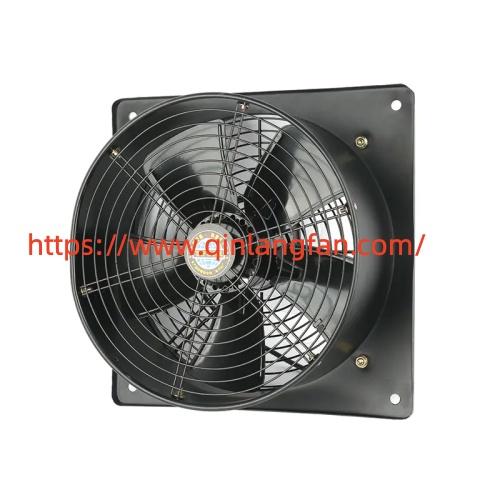
Handheld Axial Fan equipment can serve very different work areas when its airflow characteristics and physical design match the task. A large workshop, maintenance corner, warehouse aisle, machinery room, or temporary work zone can create very different demands. Qinlang develops movable ventilation equipment in several configurations, giving buyers options for situations where fixed installation is not practical.
Think about a busy workshop first. Several machines may operate at once, while workers move between different stations throughout the day. In this setting, broad air movement can help reduce stagnant conditions and make hot areas more comfortable. Positioning matters. Placing the unit where the airflow can travel across an open section usually makes more sense than directing it toward a wall or another obstruction.
A maintenance area presents a different picture. Technicians may spend only a few hours beside a machine, inside an equipment room, or near a temporary work zone. They may need airflow in one location today and another location tomorrow. A movable unit becomes useful here because the setup can change with the job instead of being tied to a permanent mounting point.
Warehouses also create interesting challenges. High ceilings, storage racks, narrow aisles, and large open sections can produce uneven air movement. A movable blower can be positioned according to the current task. If workers are concentrated in one section, the airflow can be directed toward that area. When the work shifts, the equipment can move with it.
Outdoor repair areas have another set of conditions. There may be fewer walls, more natural air movement, and changing weather. The purpose may be local cooling rather than complete air exchange. In such cases, placement becomes part of the solution. A suitable position can direct moving air toward workers or equipment without requiring a permanent structure.
Then there are semi enclosed areas. A basement, utility room, storage area, or temporary enclosure may have limited natural circulation. Here, buyers should pay closer attention to airflow distance and possible resistance. Flexible ducts can reduce actual airflow because of friction and bends, meaning the working setup should be considered rather than relying only on a catalog figure.
This is where application details become important. How large is the space? How far must air travel? Is there ducting? Are there bends or filters? Is the goal general cooling, drying, fresh air supply, or removal of unwanted air? These questions help establish whether a particular configuration fits the task.
Airflow and pressure should also be considered together. Industrial selection guidance commonly points to airflow, static pressure, temperature, medium, duct resistance, and installation layout as key factors. Choosing according to only one number can give an incomplete picture of actual operating conditions.
Mobility is another practical detail. A unit intended for frequent relocation should be comfortable to carry and stable during operation. Handles, protective structures, support arrangements, dimensions, and overall weight can influence how easily workers reposition the equipment. Qinlang offers several movable models in different sizes, including configurations intended for cooling and ventilation tasks.
Electrical compatibility deserves attention before purchase as well. Buyers should confirm voltage, frequency, motor power, current, and connection requirements. These details should correspond with the available power supply at the workplace. If equipment will run for long periods, the manufacturer should also receive information about expected operating hours.
Noise can influence placement too. In a quiet workshop, office adjacent area, or enclosed maintenance room, sound may matter more than it would in a busy industrial environment. Buyers can discuss expected sound levels and operating conditions with the manufacturer before selecting a configuration.
The surrounding environment should be described clearly. Dust, moisture, temperature, chemicals, outdoor exposure, and other conditions may influence material and protection requirements. Giving the manufacturer photographs, installation dimensions, power details, and a short description of the task can make technical communication much easier.
There is no single arrangement that fits every workplace. An open production floor may need broad circulation. A maintenance station may need localized cooling. A storage area may need air movement around obstacles. A temporary enclosure may require a carefully planned inlet and outlet arrangement. The useful approach is to match the equipment with what the workers are actually trying to accomplish.
For manufacturers and distributors comparing different ventilation products, Qinlang provides product information covering several movable configurations and application possibilities. Buyers can review the available range and discuss project requirements through https://www.qinlangfan.com/ before deciding which configuration fits their working environment.

 Arabic
 French
 Spanish
 Portuguese
 Deutsch
 Turkish
 Dutch
Dutch
 Italiano
 Russian
 Romaian
 Portuguese (Brazil)
 Greek
Greek
 Bengali