


Custom Precision Machining: When Standard Parts Fall Short
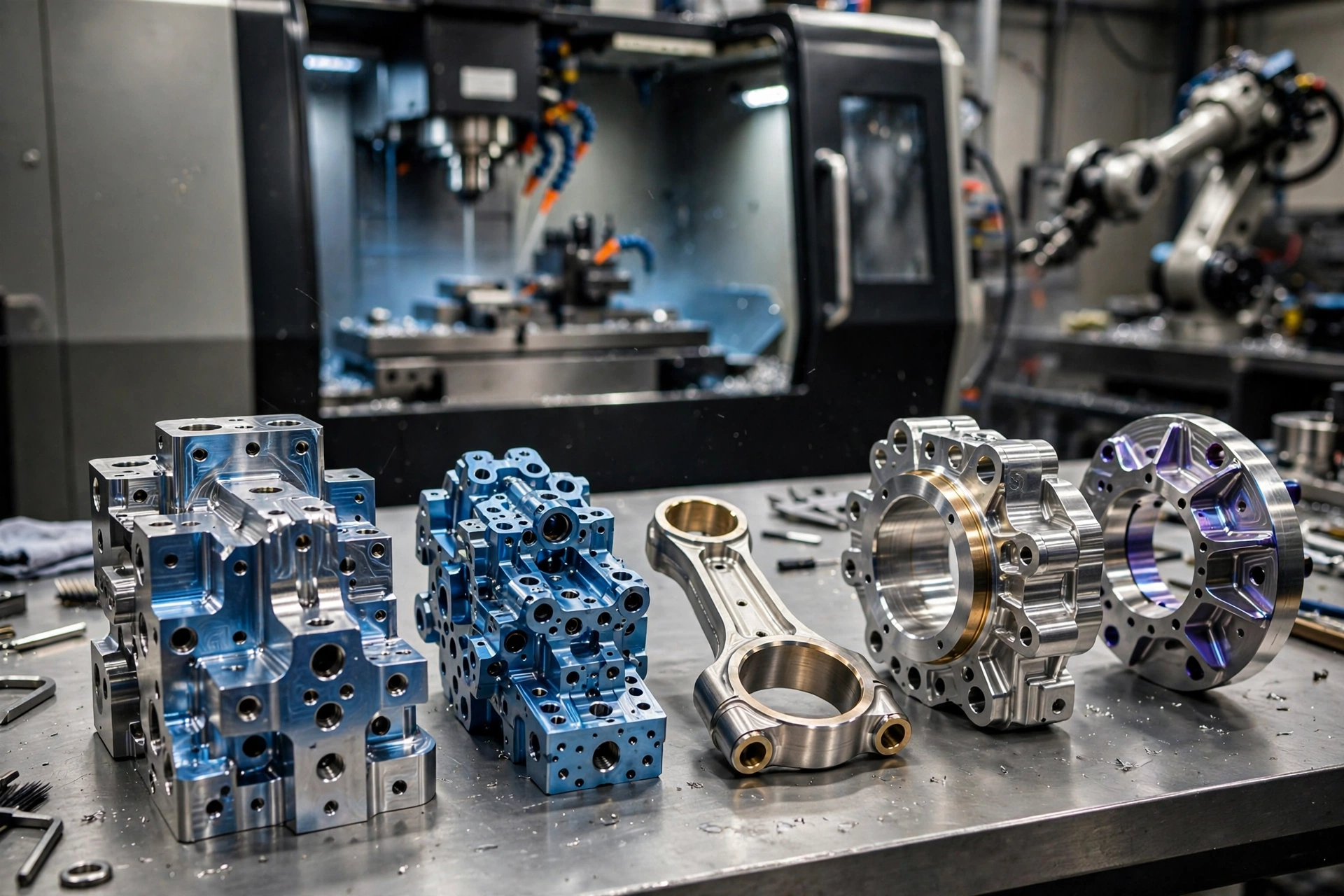
Not every component fits neatly into a standard catalog, and trying to force one that doesn't leads to the kind of premature failures that show up months after installation rather than during initial testing. Custom precision machining exists for exactly this gap — situations where a part's geometry, material requirements, or working environment fall outside what mass-produced options can reliably handle. This article looks at when custom machining makes sense, how the process works, and what to expect when working with a specialized shop, so buyers can make that call with more confidence than guesswork alone provides.
Signs That Standard Parts Won't Get the Job Done
Some situations make the need for a custom part obvious immediately — a legacy machine with no available replacement, for instance. Others are less obvious. A standard bearing might technically fit a housing but wear out twice as fast as expected because the load pattern in that specific application doesn't match what the generic part was designed for. Recognizing these situations early, before repeated failures force the issue, is one of the more underrated skills in industrial maintenance and procurement.
This is especially true for teams managing oil and gas field equipment, where components often operate under combinations of pressure, temperature, and corrosive exposure that standard catalog parts were never designed to handle for extended periods. A maintenance history showing the same part failing repeatedly across similar installations is usually a clear signal that a custom solution, not another identical replacement, is what the situation actually calls for.
How the Custom Machining Process Actually Works
Custom work typically starts differently from standard catalog orders. Instead of selecting from an existing part number, the process usually begins with either a technical drawing, a physical sample for reverse engineering, or a detailed conversation about functional requirements when no drawing exists at all. From there, engineers develop a design, select appropriate material, and program the CNC equipment to produce a first sample for approval before committing to a full run. This is where the process separates itself from generic machining — it's built around solving one specific problem rather than producing a generic part at scale. Every step, from material selection to final inspection, gets shaped by the exact conditions the part will face once it's back in service, whether that's a corrosive offshore environment or a high-vibration industrial line.
Industries That Rely Most Heavily on Custom Machining
Certain sectors depend on custom precision machines far more than others, largely because their equipment tends to be specialized, expensive to replace, or built around exact tolerances that standard parts simply can't meet.
-
Oil and gas — legacy equipment, corrosive environments, and safety-critical tolerances for oil and gas field equipment
-
Aerospace supply chains — extremely tight tolerance requirements with full material traceability
-
Heavy industrial machinery — components subject to continuous mechanical stress
-
Medical and laboratory equipment — precision requirements combined with strict material regulations
Buyers in these sectors tend to build long-term relationships with a machining partner rather than shopping for a new supplier on every project, since consistency across repeat orders often matters as much as the quality of any single part.
What to Expect When Working With a Custom Machining Shop
The timeline and cost structure for custom work differs meaningfully from ordering standard parts. Expect an initial design or reverse-engineering phase, a quoted lead time that's typically longer than a catalog order, and a first-article inspection step before full production begins. Good shops will walk clients through trade-offs during this process — for example, explaining that a slightly different tolerance specification could reduce cost significantly without compromising function. Buyers who go in expecting a purely transactional order often find the collaborative nature of custom work surprising, but that back-and-forth is usually what produces a part that actually performs as intended. Setting realistic expectations upfront, rather than assuming custom work will move at catalog-order speed, also prevents unnecessary friction later in the project.
Conclusion
Custom precision machining fills a gap that standard catalog parts simply can't reach, particularly for legacy equipment, specialized applications, and industries like oil and gas field equipment where tolerance and material integrity directly affect safety. Working with a shop that treats custom work as a core capability, not a side service, tends to produce far more reliable results. If you're dealing with a part that no longer has a straightforward replacement, it's worth having that conversation with a machining team before the equipment fails completely.
FAQs
1. How long does a custom machining project typically take compared to standard parts?
Because custom machining involves both designing and then inspecting the first article, there can be delays that add one to two weeks to the process.
2. Can a part be custom machined from a physical sample instead of a drawing?
Yes, it is very common to do reverse engineering based on the physical part.
3. Is custom machining significantly more expensive than standard parts?
It varies from case to case, but in some cases, when the part is used in legacy machines or it is not standardized, it may be cheaper to custom machine than to redesign the whole assembly.
4. What industries request this kind of custom machining most often?
The oil and gas industry, the aerospace supply industry, heavy machinery and medical equipment are some of the industries that use custom machining the most.
5. What should I provide when requesting a quote for a custom part?
A drawing or physical sample, the environmental conditions in which the part will be operating, tolerances needed and quantities are some of the things that help shops quote.

 Arabic
 French
 Spanish
 Portuguese
 Deutsch
 Turkish
 Dutch
Dutch
 Italiano
 Russian
 Romaian
 Portuguese (Brazil)
 Greek
Greek
 Bengali