


Product Labels: A User-Focused Guide to Easier Shopping on Shopify
Introduction
When shoppers visit an online store, they usually do not read every product description before deciding what to explore. They scan images, prices, product names, and visual signals that help them understand their options quickly. This is where product labels can make a real difference.
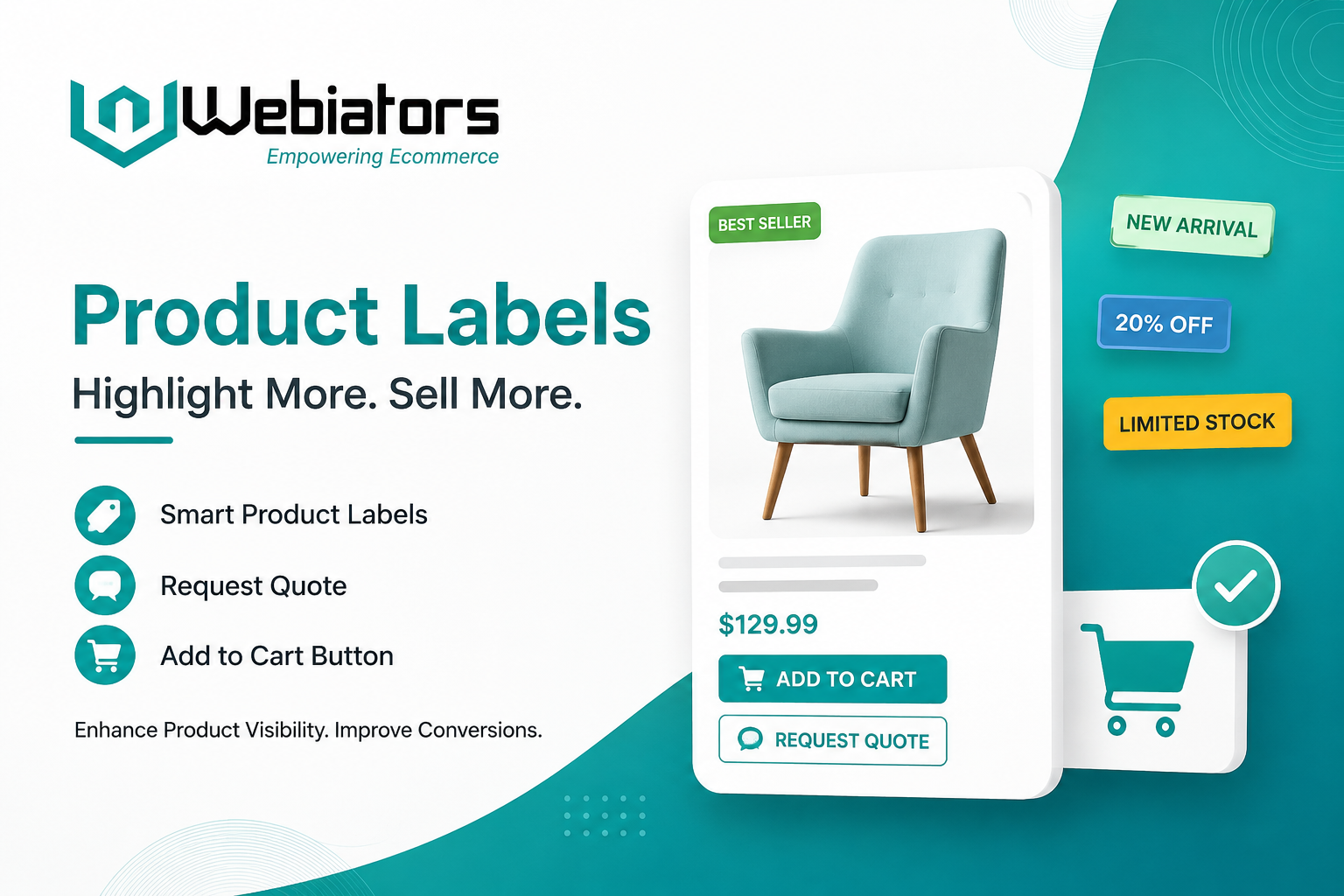
Labels such as New Arrival, Best Seller, Sale, Limited Stock, or Featured can give shoppers useful information without requiring extra clicks. When combined with a clear add to cart button and an appropriate request quote option, product pages and collection pages can become easier to navigate and more useful for different types of buyers.
What Are Product Labels?
Product labels are small visual indicators placed on product cards or product pages to communicate important information about an item.
For example, a shopper browsing a clothing store may see:
- New Arrival
- Best Seller
- 30% Off
- Limited Stock
- Trending
- Featured
These labels work as quick decision-making signals. Instead of opening several products to discover which ones are new or discounted, shoppers can identify relevant products while browsing.
The key is to use labels for information customers genuinely find useful.
Why Product Labels Improve the Shopping Experience
A good ecommerce experience should reduce unnecessary effort. Customers should be able to understand what they are looking at and what they can do next.
Product labels help by making important product information visible earlier in the journey.
Imagine a customer browsing 40 products in a collection. Without labels, they may need to open individual products to determine which ones are new, discounted, or popular. With meaningful labels, those differences become immediately visible.
This can make product discovery faster and help shoppers focus their attention on products that match their needs.
Choosing the Right Product Label
Not every product needs the same label. The right choice depends on your inventory, customers, and business model.
For example, a fashion store may benefit from New Arrival and Trending labels. A seasonal store might use Seasonal Pick or Limited Stock. A promotional campaign could use Sale or Special Offer.
Before adding a label, ask one simple question:
“Will this information help the customer make a decision?”
If the answer is yes, the label may be useful. If not, it may simply add visual clutter.
Product Labels and the Add to Cart Button
Finding an interesting product is only one part of the shopping journey. Customers also need an obvious way to take action.
This is where the add to cart button becomes important.
A product card can communicate information in a simple sequence:
Product image → Product label → Product name → Price → Add to cart button
For products with straightforward pricing and purchasing, this structure gives shoppers a clear path from discovery to purchase.
The add to cart button should be easy to identify and should clearly communicate its purpose. On mobile devices, it should also be large enough to tap comfortably.
A complicated checkout journey can create unnecessary friction, so keeping the next action clear is important.
When a Request Quote Option Makes More Sense
Some products cannot be purchased through a standard fixed-price process.
Businesses selling customized products, wholesale quantities, commercial equipment, or made-to-order items may need to discuss requirements before confirming the final price.
For these products, a request quote option can provide a more suitable customer journey.
For example, a furniture business selling customized office desks could display a Customizable product label and provide a Request Quote action.
Similarly, a wholesale supplier could use a Bulk Available label and allow customers to request pricing based on quantity.
This gives customers an appropriate way to start a conversation rather than forcing them into a standard checkout process.
How to Keep Product Labels User-Friendly
Product labels should improve clarity, not overwhelm shoppers.
A few practical guidelines can help:
Keep Labels Short
“Best Seller” is easier to scan than a long sentence describing why a product is popular.
Use Relevant Labels
Only display labels that provide meaningful information about the product.
Avoid Too Many Badges
If a product has five or six labels competing for attention, none of them may stand out.
Keep Placement Consistent
Labels should appear in a predictable location across product cards so shoppers can scan collections easily.
Consider Mobile Users
Make sure labels remain readable on smaller screens and do not cover important parts of product images.
Common Mistakes to Avoid
One mistake is using the same label on almost every product. If everything is a “Best Seller,” the label stops helping customers distinguish products.
Another problem is using labels to create artificial urgency. A Limited Stock label should represent genuine inventory conditions. Misleading information can damage customer trust.
It is also important not to let labels cover product images, prices, or other essential information.
Finally, remember that product labels are supporting information. Product quality, pricing, images, descriptions, reviews, and customer service still play major roles in the purchasing decision.
A Better Product Browsing Experience
A user-focused Shopify store does not need to make every element complicated. Small improvements can make browsing more understandable.
Product labels can answer one question quickly: “Why should I pay attention to this product?”
The add to cart button answers another: “What can I do next?”
A request quote option answers a different need: “How can I ask about pricing or customization?”
When these elements are used appropriately, shoppers can move through the store according to their own buying intent.
How Webiators Can Support Shopify Merchants
For merchants looking to improve their Shopify storefront experience, Webiators offers ecommerce-focused solutions that can help businesses organize product information and customer actions more effectively.
The Webiators Technology Shopify partner profile provides another place for merchants to explore the company's Shopify-related services and solutions.
The best approach is to select features according to the actual needs of your customers rather than adding functionality simply because it is available.
Key Takeaways
- Product labels make important product information easier to notice.
- Use labels such as New Arrival, Best Seller, Sale, or Limited Stock when they provide genuine value.
- A clear add to cart button helps shoppers take the next step.
- A request quote option works well for customized, wholesale, and inquiry-based products.
- Avoid excessive or misleading labels.
- Keep the experience simple and mobile-friendly.
- Always prioritize useful information over visual decoration.
Conclusion
Product labels may be a small part of an ecommerce storefront, but they can have a meaningful effect on how shoppers discover and evaluate products. When labels communicate useful information, the add to cart button provides a clear purchasing action, and request quote functionality supports customers who need personalized pricing, the overall shopping journey becomes easier to understand.
For Shopify merchants, the goal should be simple: give customers the right information at the right moment and make the next step obvious.

 Arabic
 French
 Spanish
 Portuguese
 Deutsch
 Turkish
 Dutch
Dutch
 Italiano
 Russian
 Romaian
 Portuguese (Brazil)
 Greek
Greek
 Bengali