


How Structural Steel Detailing Services Eliminate the Risk of Costly Field Corrections
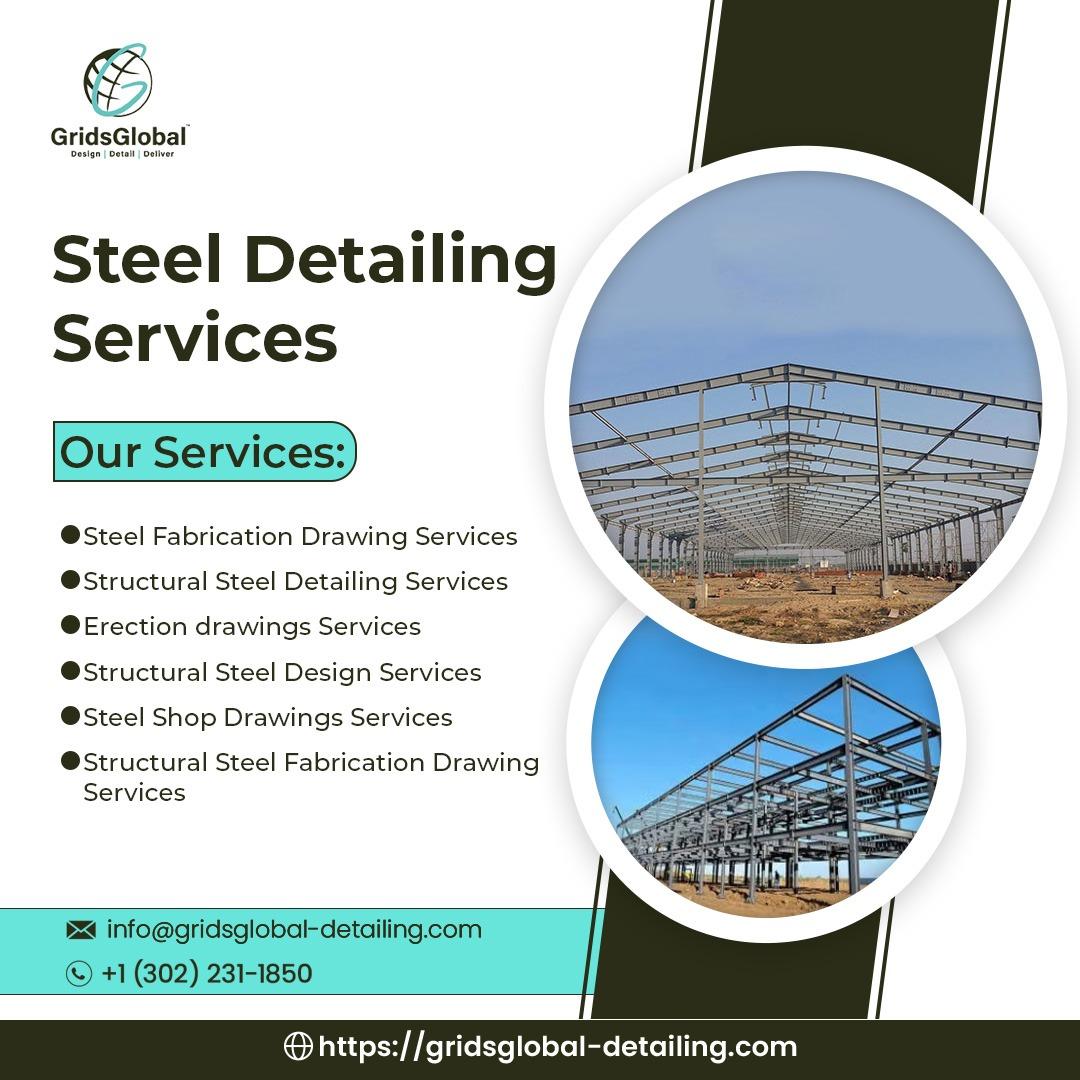
The most damaging expense on a steel construction project is not the price of raw material or the hourly wage of the erection crew. It is the cost of discovering, during erection, that a fabricated beam does not fit. Such discoveries halt crane operations, idle skilled labor, and initiate a sequence of delay claims that no contract clause can fully absorb. The most effective safeguard against this scenario is a comprehensive digital validation process carried out well before the first steel order is placed. This process is the work of professional Structural Steel Detailing Services. When project owners partner with an experienced firm such as GridsGlobal Steel Detailing LLC, they receive a fully coordinated three-dimensional prototype that resolves dimensional conflicts, verifies component geometry, and generates precise material schedules. This rigorous preparation ensures that all fabricated steel assembles without field modifications, protecting both the project schedule and the construction budget.
Digital Prototyping and the Production of a Comprehensive Bill of Material
Contemporary structural designs often incorporate complex geometries, inclined members, irregular bracing patterns, and densely coordinated mechanical, electrical, and plumbing services. These conditions demand a level of spatial accuracy that conventional two-dimensional drawings cannot deliver. Detailing specialists address this challenge by constructing richly detailed 3D BIM environments that function as exact digital replicas of the finished steel frame. Within these coordinated virtual spaces, every cope, stiffener, bolt hole, and weld preparation is positioned with millimeter precision, exactly as it will appear during fabrication. The model becomes the single authoritative source of dimensional truth for all project stakeholders.
Once the digital twin is fully assembled, the team conducts a thorough series of constructability checks directly within the model. These checks confirm that welding equipment can physically access every joint, that torque wrenches have adequate clearance for fastener tightening, and that the normal accumulation of permissible fabrication tolerances will assist, rather than obstruct, the erection process. This virtual review identifies and resolves conflicts that would otherwise manifest as expensive field corrections, schedule delays, and budget overruns.
After all clearance and tolerance validations are satisfied, the approved model data transfers directly to CNC beam lines, plate processors, and drill stations, generating shop drawings of exceptional mathematical accuracy. Fabrication shops then cut, drill, and weld individual components with repeatable precision, allowing each piece to arrive on site pre-labeled and ready for immediate installation. Field grinding, hole reaming, and corrective welding are entirely eliminated from the project schedule.
Simultaneously, the model automatically produces a comprehensive Bill of Material (BOM). This document lists every structural shape, plate thickness, high-strength bolt grade, and welding consumable by its unique piece mark. The BOM becomes the primary procurement tool, enabling supply chain managers to synchronize mill orders precisely with fabrication schedules. Fabricators determine exact tonnage requirements for each profile, accounting for every cut-off, stiffener, and base plate. This level of control prevents both material shortages that halt production and surplus inventory that inflates carrying costs. Across multiple fabrication facilities, the BOM serves as the master tracking document, ensuring each delivery aligns with the planned erection sequence. Further detail on the processes that underpin this accuracy is available through professional Structural Steel Detailing Services.
Connection Performance Validation and Bill of Quantity Transparency
While precise detailing confirms that steel members will fit together without interference, the completed frame must also safely withstand decades of dead loads, live loads, wind pressures, and seismic events without any joint exceeding its design capacity. Connections are the concentrated stress pathways where forces change direction, and their behavior under combined loading demands rigorous structural analysis. This requirement is met through specialized Structural Steel Connection Design Services. Connection engineers systematically evaluate failure mechanisms such as prying action, block shear rupture, web crippling, and bolt tension fatigue. Following international design codes, they establish definitive end plate dimensions, stiffener arrangements, bolt spacings, and fillet weld leg sizes that safely accommodate beam end rotation while restraining lateral drift within permissible limits.
This same analytical discipline also generates a detailed Bill of Quantity (BOQ) that categorizes each connection type by unit count, estimated labor hours, fastener quantities, and any specialized welding or non-destructive testing requirements. The BOQ transforms connection expenditure from a rough estimate into a fully transparent, line-item cost. With this level of detail, estimators can sharpen their bids, project controllers can build reliable cash flow forecasts, and international stakeholders receive financial reports grounded in measurable engineering quantities. Guidance on avoiding common design errors is accessible through Structural Steel Connection Design Services, while Structural Steel Connection Design Services that incorporate customized seismic detailing provide enhanced resilience for structures located in seismically active regions.
Capital Protection and Supply Chain Efficiency
When spatial coordination and connection analysis are given insufficient priority, capital-intensive projects face significant financial exposure. Unverified dimensions or incompatible fastener specifications can embed latent defects that become apparent only when field corrections are both unavoidable and expensive. Such outcomes erode profit margins and introduce unnecessary safety risks for erection crews. Adopting a comprehensive structural validation strategy removes this exposure. Complete digital coordination prevents the cascade of costs associated with field rework, schedule extensions, and contractual penalties. The integrated BOM and BOQ workflows further strengthen budget control by reducing material waste, closing procurement gaps, and enabling just-in-time delivery schedules that minimize on-site storage requirements.
Engineering Stewardship for Generational Infrastructure
Delivering landmark commercial and industrial facilities demands absolute precision and thorough validation at every stage. The combination of exhaustive digital prototyping, rigorous connection analysis, and meticulous material quantification provides the most robust safeguard against structural underperformance. By maintaining uncompromising technical standards from the earliest project phases, developers and contractors secure the predictable delivery of resilient, future-ready assets built for decades of reliable service.
To discuss tailored constructability strategies, including complete BOM compilation, BOQ structuring, and advanced model coordination for your next project, visit our contact us page.
Corporate Contact Information
United States Operations
GRIDSGLOBAL STEEL DETAILING LLC
Address: 1207 Delaware Ave, Unit 2877, Wilmington, DE 19806
Phone: +1 (302) 231-1850
Email: info@gridsglobal-detailing.com
Website: https://gridsglobal-detailing.com/

 English
 French
 Spanish
 Portuguese
 Deutsch
 Turkish
 Dutch
Dutch
 Italiano
 Russian
 Romaian
 Portuguese (Brazil)
 Greek
Greek
 Bengali