


A Comprehensive and In-Depth Global Zero Trust Security Market Analysis
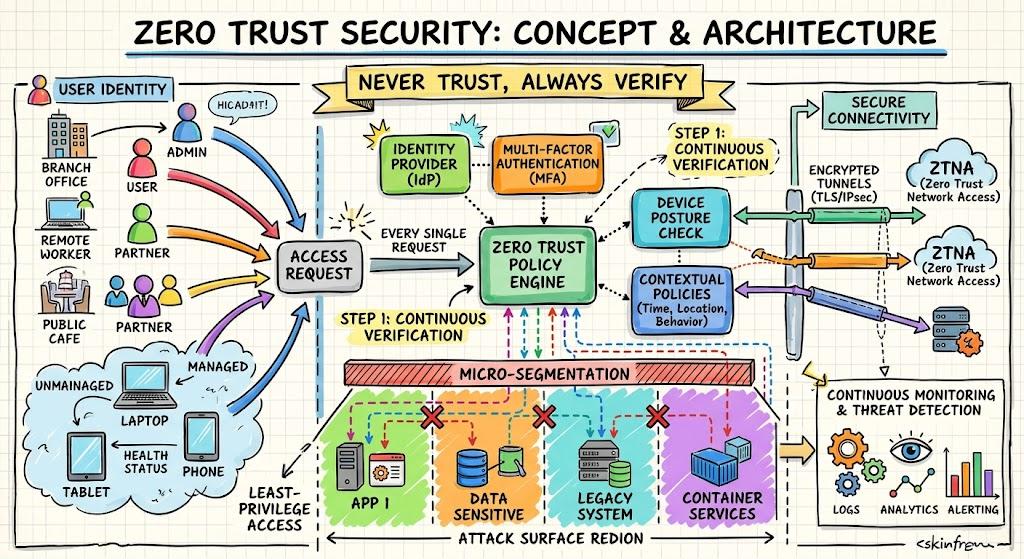
The End of Trust: Core Drivers of the Zero Trust Revolution
The traditional cybersecurity model, built on the concept of a trusted internal network and an untrusted external world, has become dangerously obsolete. A detailed global Zero Trust Security Market Analysis shows organizations are embracing a new, more resilient paradigm defined by the principle: "never trust, always verify." This strategic approach assumes that breaches are inevitable and that no user or device, whether inside or outside the network perimeter, should be implicitly trusted. The primary drivers fueling this massive market shift are the dissolution of the traditional network perimeter due to mass cloud adoption, the proliferation of remote work, and the increasing use of personal devices (BYOD). As assets, data, and users become more distributed, the old castle-and-moat security model fails. Coupled with the rising sophistication of cyber threats like ransomware and advanced persistent threats (APTs) that can easily bypass perimeter defenses, the need for a more granular, identity-centric security model has become a critical business imperative for enterprises across the globe.
The Pillars of a Modern Fortress: Core Tenets of Zero Trust
A Zero Trust architecture is not a single product but a comprehensive strategic framework built on several interconnected technological pillars. The cornerstone of this model is strong identity verification. It mandates that every user and device must be strictly authenticated and authorized before being granted access to any resource, regardless of its location. This is typically enforced through robust Identity and Access Management (IAM) solutions and Multi-Factor Authentication (MFA). The principle of least privilege access is then applied, ensuring that users and applications are granted only the absolute minimum level of access required to perform their specific function, drastically limiting the potential damage a compromised account can inflict. Micro-segmentation is another critical pillar, which involves breaking the network down into small, isolated zones to prevent the lateral movement of attackers. By creating secure micro-perimeters around specific applications or data sets, a breach in one segment can be contained and prevented from spreading across the entire network. Continuous monitoring and analytics provide the intelligence layer, constantly assessing device health, user behavior, and other contextual signals to detect and respond to threats in real-time.
From Theory to Practice: Implementing Zero Trust Across the Enterprise
Implementing Zero Trust is a journey, not a destination, requiring a phased, strategic approach rather than a wholesale "rip and replace" of existing infrastructure. The process typically begins with identifying the most critical data, assets, and applications—the "protect surface"—and understanding the transaction flows to and from these assets. The next step is to architect the Zero Trust environment by implementing micro-segmentation and creating granular access policies based on the "who, what, when, where, and why" of each access request. This involves deploying and integrating key technologies like next-generation firewalls, identity providers, endpoint security solutions, and security analytics platforms. The impact of this model is felt across all industries, but it is particularly critical in highly regulated sectors like finance, healthcare, and government, where protecting sensitive data is paramount for compliance and operational integrity. By securing access to cloud workloads, protecting remote workers, and safeguarding critical infrastructure, Zero Trust provides a unified security model that adapts to the complexities of the modern hybrid IT landscape, moving security as close to the asset as possible.
Navigating Challenges and Embracing the Future of Adaptive Security
Despite its compelling security benefits, the path to a full Zero Trust implementation is not without its challenges. One of the biggest hurdles is managing the complexity of integrating multiple security solutions and policies across a diverse and often fragmented IT environment, which can include legacy systems that were not designed for such granular controls. There is also a risk of creating a poor user experience if access policies are overly restrictive or if authentication processes are too cumbersome, leading to a loss in productivity and user pushback. A significant cybersecurity skills gap also means that many organizations lack the in-house expertise to design and manage a sophisticated Zero Trust architecture. Looking ahead, the future of Zero Trust is intrinsically linked with automation and artificial intelligence. AI and machine learning will be used to create dynamic, context-aware policies that adapt in real-time based on risk assessments. The convergence of Zero Trust with Secure Access Service Edge (SASE) frameworks will further integrate networking and security into a unified, cloud-native service, perfectly suited for the distributed workforce. This evolution promises a more intelligent, automated, and adaptive security posture for the future.
Explore More Like This in Our Reports:

 English
 Arabic
 French
 Spanish
 Portuguese
 Turkish
 Dutch
Dutch
 Italiano
 Russian
 Romaian
 Portuguese (Brazil)
 Greek
Greek
 Bengali