


RTD Tea Market Trends Reveal New Opportunities in Functional Beverages
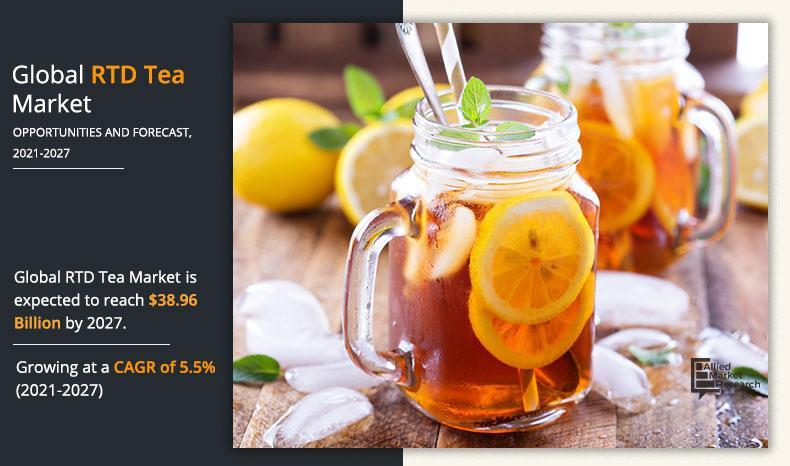
The RTD Tea Market is experiencing a transformation as ready-to-drink tea moves from a simple refreshment product toward a diverse category of wellness, functional, and premium beverages. Consumers are increasingly seeking convenient products that fit busy lifestyles while also meeting expectations around taste, ingredients, calories, and nutritional positioning. Market research highlights convenience, low-sugar formulations, premiumization, and functional ingredients as important forces influencing the category.
The expansion of functional tea beverages is creating new opportunities for manufacturers to differentiate their products. Instead of competing only through traditional tea flavors, companies can develop products containing botanicals, vitamins, minerals, adaptogenic ingredients, or other wellness-oriented components. This approach allows RTD tea to compete more directly with functional waters, energy beverages, sports drinks, and other health-positioned products.
Functional Formulations Gain Momentum
Functional beverages are increasingly influencing innovation across the global beverage industry. Consumers want products that provide more than hydration and refreshment, and RTD tea can serve as an effective platform for delivering additional ingredients.
Green tea is particularly suitable for wellness positioning because of its established consumer perception. Herbal teas also provide opportunities for manufacturers to develop products around relaxation, digestive wellness, and everyday lifestyle routines.
Some brands are exploring combinations involving botanicals, adaptogens, probiotics, and other specialty ingredients. These innovations can create differentiated products aimed at specific consumer needs. However, manufacturers must carefully manage formulation, taste, stability, labeling requirements, and regulatory considerations.
Low-Sugar Products Attract Health-Conscious Consumers
Sugar reduction remains a major trend within the beverage industry. Consumers are increasingly examining nutrition labels and looking for beverages that provide flavor without excessive sugar. This has encouraged RTD tea companies to introduce unsweetened, lightly sweetened, and zero-sugar options.
Unsweetened green tea and black tea can appeal to consumers seeking a straightforward beverage with minimal ingredients. Flavored varieties can also be reformulated using alternative sweetening systems to preserve taste while reducing calories.
The challenge for manufacturers is maintaining a satisfying flavor profile. Tea naturally contains bitter and astringent notes, meaning that reducing sugar can change the overall sensory experience. Companies therefore need to invest in flavor development and formulation technologies to achieve a balanced product.
Premiumization Creates New Revenue Opportunities
Premium RTD tea products are gaining attention as consumers become more interested in sophisticated flavors, higher-quality tea ingredients, and distinctive packaging. Premiumization enables brands to move beyond mass-market iced tea and target consumers who are willing to pay more for a differentiated experience.
Single-origin tea, cold-brewed tea, organic ingredients, botanical infusions, and sparkling formats can contribute to premium positioning. Attractive packaging can further strengthen the perception of quality.
Premium products may also benefit from café culture. Consumers familiar with specialty cafés are increasingly exposed to cold teas, matcha beverages, fruit-infused teas, and other sophisticated tea-based drinks. Bottled and canned versions can bring similar experiences into convenience stores and supermarkets.
Younger Consumers Influence Product Development
Younger consumers are playing an important role in beverage innovation. Millennials and Gen Z often seek products that combine convenience, visual appeal, unique flavors, and lifestyle relevance.
Social media can accelerate awareness of new RTD tea products. Bright packaging, unusual flavor combinations, and visually distinctive beverages can encourage consumer engagement and online sharing.
Brands are also using limited-edition flavors and seasonal launches to generate excitement. These strategies can encourage trial while allowing companies to test consumer reactions before introducing products on a larger scale.
Distribution Continues to Expand
RTD tea is available through supermarkets, convenience stores, specialty retailers, cafés, restaurants, vending machines, and online channels. This broad distribution environment allows brands to reach consumers across multiple consumption occasions.
Convenience stores are particularly relevant for on-the-go consumption, while supermarkets provide opportunities for multipacks and household purchases. Online platforms can support discovery and direct-to-consumer strategies.
In markets such as India, expanding distribution and consumer interest in modern tea formats are creating additional opportunities. Industry research indicates that innovation around flavors, wellness, and functional positioning could help RTD tea expand its consumer base.
Sustainability Becomes a Competitive Factor
Environmental considerations are becoming increasingly relevant to beverage packaging. Consumers and regulators are placing greater attention on recyclability, packaging waste, and resource efficiency.
Manufacturers are therefore exploring recycled PET, aluminum cans, glass, cartons, and other packaging solutions. Sustainable packaging can help strengthen brand reputation, although companies must consider cost, transportation, durability, and shelf-life requirements.
Outlook for the Industry
The future of RTD tea is likely to involve a combination of traditional tea culture and modern beverage innovation. Functional ingredients, reduced sugar, premium flavors, sustainable packaging, and convenient distribution can help the category attract new consumers.
Companies that understand regional taste preferences and develop products around specific consumption occasions may gain an advantage. As consumers continue to prioritize convenience and wellness, RTD tea has significant potential to become an increasingly diversified beverage category.
FAQs
1. What are functional RTD teas?
Functional RTD teas are ready-to-drink tea products formulated with additional ingredients intended to support particular lifestyle or wellness positioning.
2. Why are low-sugar RTD teas becoming popular?
Consumers are increasingly monitoring sugar and calorie intake, encouraging demand for unsweetened, lightly sweetened, and zero-sugar beverages.
3. How can RTD tea brands differentiate themselves?
Brands can differentiate through premium tea ingredients, innovative flavors, functional formulations, sustainable packaging, and strong convenience-focused distribution.

 Arabic
 French
 Spanish
 Portuguese
 Deutsch
 Turkish
 Dutch
Dutch
 Italiano
 Russian
 Romaian
 Portuguese (Brazil)
 Greek
Greek
 Bengali