


Laser Hair Removal in Dubai: Understanding Results
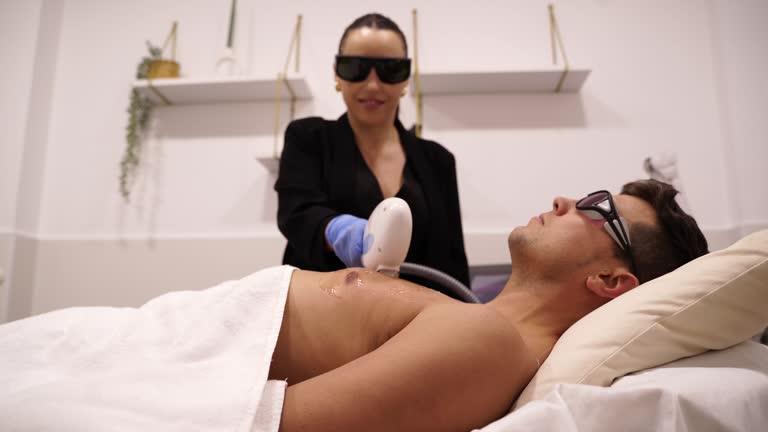
Laser hair removal in Dubai (إزالة الشعر بالليزر في دبي) is a gradual process, so understanding how results develop can help you evaluate treatment more realistically. Hair may continue to appear after an appointment, and different areas can respond at different speeds. Instead of expecting an immediate transformation, it is more useful to look for changes in regrowth, density, texture, and grooming frequency as the treatment course progresses.
What Does Hair Reduction Actually Mean?
Laser treatment is generally focused on reducing unwanted hair growth rather than promising that every strand will disappear permanently.
The objective is to affect suitable hair follicles so that future growth becomes reduced over time.
Some follicles may respond strongly, while others may continue producing hair.
This is why the term "hair reduction" is more appropriate than assuming complete and permanent hair removal for everyone.
Why Results Develop Gradually
Hair follicles move through different growth phases.
Laser treatment is most effective when suitable follicles are in the appropriate stage of the growth cycle.
Because follicles are not synchronized, one appointment cannot effectively target every hair at the same moment.
Multiple sessions allow the treatment process to address different groups of follicles as they become suitable targets.
What You May Notice First
Early changes can sometimes be subtle.
You may notice that some treated hairs become less noticeable or that the area does not appear to regrow as quickly as before.
In some cases, hairs may shed after treatment rather than immediately disappearing during the appointment.
The timing of visible changes varies, so comparing the area over several weeks can be more useful than checking it immediately.
Slower Regrowth
One possible sign of progress is that you do not need to remove hair as frequently as before.
For example, if you previously shaved every few days but gradually find that the area stays manageable for longer, this may indicate a change in the regrowth pattern.
However, individual experiences differ.
The important point is to evaluate your own routine over time.
Reduced Hair Density
Another change can involve the amount of visible hair.
An area that once appeared densely covered may gradually look more open as suitable follicles respond.
This can be easier to notice in areas such as the legs, underarms, chest, or back.
Taking consistent photographs can help you compare density more accurately.
Changes in Hair Texture
Some people notice that remaining hair appears finer as treatment progresses.
The texture of regrowth can therefore become different from the original hair.
However, this does not happen identically for everyone.
Some areas may continue to contain coarse strands even while overall density decreases.
Why Different Body Areas Respond Differently
Your body does not have one uniform hair-growth pattern.
Underarm hair can be coarse and dense, while arm hair may be finer.
Facial hair may also have different hormonal influences compared with leg or body hair.
These differences can cause one treatment area to show visible changes sooner than another.
Facial Hair Can Behave Differently
Facial hair can be particularly variable.
The chin, upper lip, jawline, and neck may each have different growth characteristics.
Hormonal influences can also contribute to new facial hair over time.
For this reason, facial treatment may require realistic expectations about both reduction and future maintenance.
Why Some Hair Remains
Not every follicle responds identically to laser energy.
Hair color, thickness, density, growth stage, skin characteristics, and individual biology can all influence the outcome.
Some remaining strands may therefore persist even after noticeable overall reduction.
This is not necessarily evidence that the treatment has failed.
When Progress Seems Uneven
You may notice one side of an area looking smoother than the other.
Uneven progress can occur because hair follicles do not grow in perfect synchronization.
Differences in hair density and local characteristics can also contribute.
If a particular area consistently behaves differently over several sessions, it can be worth discussing during a treatment review.
What Happens to Regrowth Between Sessions?
Visible hair can still appear during the treatment course.
This does not mean every visible strand represents treatment failure.
Some follicles may not yet have been effectively addressed, while others may be producing new growth according to their natural cycle.
Temporary grooming can usually be used to manage visible hair according to the treatment instructions.
Why Shaving Does Not Automatically Mean Treatment Is Not Working
Some people become concerned when they still need to shave after starting laser treatment.
However, shaving can remain part of the routine during treatment.
The long-term objective is to reduce the amount of hair that grows back, not necessarily to eliminate the need for shaving after the first appointment.
A reduction in shaving frequency over time can be a more meaningful indicator.
How to Compare Results Properly
Comparisons are most useful when conditions remain similar.
Try to evaluate the same body area under similar lighting and with comparable hair length.
A photograph taken immediately after shaving may look very different from one taken several days later.
Consistent observation can help you recognize gradual changes that may otherwise be difficult to notice.
Why Online Before-and-After Photos Can Be Misleading
Before-and-after images can look impressive, but they do not show every factor behind the result.
Lighting, camera settings, hair length, skin condition, treatment history, and the number of sessions can all influence appearance.
One person's result should therefore not be treated as a guaranteed prediction of what another person will experience.
Does More Treatment Always Mean Better Results?
Not necessarily.
Laser treatment depends on appropriate timing, suitable technology, and individualized treatment parameters.
Increasing treatment frequency without considering the hair-growth cycle does not automatically speed up the process.
A structured course based on the characteristics of the treatment area is more sensible than trying to rush results.
What Can Influence Your Results?
Several factors can affect the outcome, including:
Hair color.
Hair thickness.
Hair density.
Skin pigmentation.
Treatment area.
Hormonal influences.
Consistency of sessions.
Recent sun exposure.
Individual biological response.
These variables explain why results can differ significantly between people.
Why Darker Hair May Respond Differently
Hair with more pigment can provide a stronger target for many laser technologies.
This is one reason darker, coarser hair may respond differently from very light or fine hair.
As treatment progresses, the remaining hair may become finer or less pigmented, which can make later-stage reduction more gradual.
What About Light or Gray Hair?
Very light, white, or gray hair may contain insufficient pigment for some laser technologies to target effectively.
If the remaining growth becomes increasingly light, the visible improvement may eventually slow.
Understanding this possibility before treatment can help keep expectations realistic.
How Hormones Can Affect Long-Term Results
Hormonal activity can influence hair growth, particularly in areas such as the face, neck, chest, and abdomen.
A successful reduction of existing hair does not necessarily prevent new follicles from becoming active later.
Some people may therefore require maintenance treatment in the future.
When Should You Review Your Progress?
Progress is usually more meaningful when evaluated across several sessions rather than immediately after one appointment.
If you are unsure whether the treatment is producing sufficient change, keep track of your regrowth pattern and discuss your observations during a scheduled assessment.
Specific information is more useful than simply saying that the treatment "doesn't seem to work."
Signs That Your Routine May Be Changing
One of the most practical measures of progress is how your grooming habits change.
You may find that:
You shave less often.
You spend less time removing hair.
Regrowth becomes less dense.
Individual strands appear finer.
Some areas stay smooth for longer.
These changes can be more relevant to everyday life than focusing only on visual appearance.
Long-Term Expectations
Laser hair reduction is intended to create a lasting decrease in suitable hair growth, but results vary.
Some people may achieve substantial reduction, while others may continue to experience noticeable regrowth.
Maintenance sessions can sometimes be useful when new growth appears.
Long-term management should therefore be viewed as an ongoing process rather than a guaranteed one-time solution.
Final Thoughts
Laser hair removal in Dubai should be evaluated as a progressive hair-reduction process rather than an instant transformation. Slower regrowth, reduced density, finer remaining hairs, and less frequent grooming can all provide useful indications of progress, although individual results vary according to hair characteristics, skin pigmentation, treatment area, hormonal influences, and other factors. Tracking changes over multiple sessions can provide a clearer picture than judging the outcome after a single appointment. TAJMEELS DUBAI عيادة تجميل provides an opportunity to explore a personalized laser hair-reduction plan with realistic expectations about long-term results.

 English
 Arabic
 French
 Spanish
 Portuguese
 Deutsch
 Turkish
 Dutch
Dutch
 Italiano
 Russian
 Portuguese (Brazil)
 Greek
Greek
 Bengali