


Rush Patch Embroidery Craft Studio: Complete Guide to Custom Patches
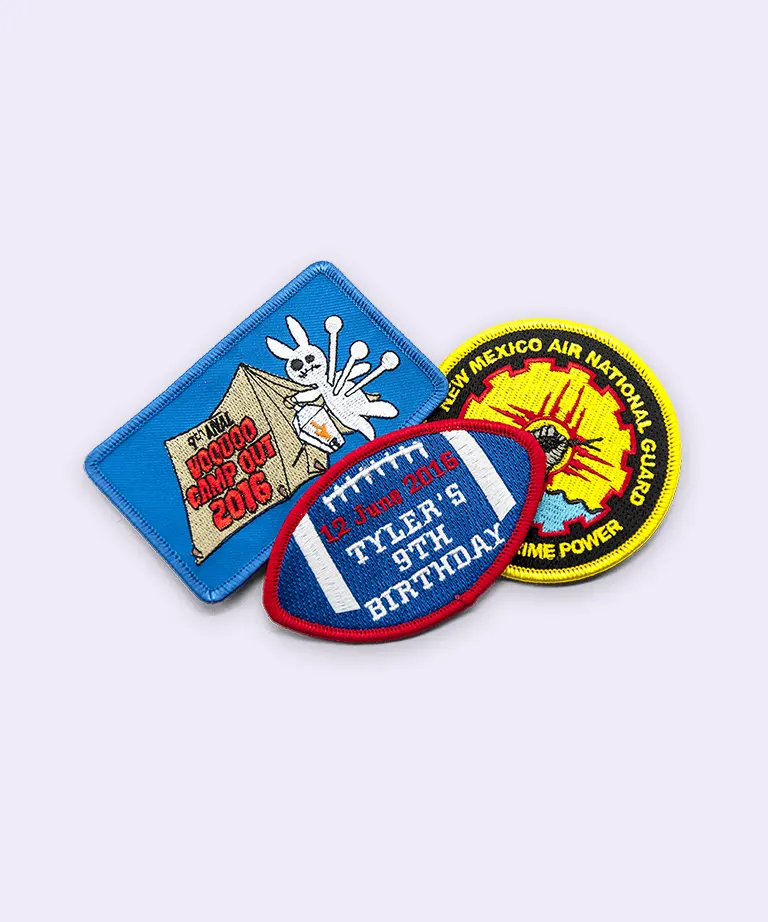
Embroidery is more than simply stitching thread onto fabric. It is a detailed craft that combines artwork, thread selection, stitch techniques, fabric choices, machine settings, and finishing methods. For anyone interested in learning how embroidered patches are designed and produced, Rush Patch Embroidery Craft Studio provides an educational approach to understanding the craft behind custom patches.
EmbroiderCraft Studio is the media and publication division of Rush Patch. It focuses on educational content, tutorials, articles, and practical guides designed to help embroidery professionals, hobbyists, creators, and businesses better understand the art and process of making patches. The studio builds on Rush Patch's experience in custom patch manufacturing while focusing specifically on knowledge and education.
What Is Rush Patch Embroidery Craft Studio?
Rush Patch Embroidery Craft Studio is an educational platform powered by Rush Patch that focuses on embroidery and patch-making knowledge.
While Rush Patch specializes in producing custom embroidered, woven, PVC, chenille, leather, and other specialty patches, EmbroiderCraft Studio focuses on explaining the techniques and concepts behind patch creation.
This distinction is important because creating a successful embroidered patch involves more than converting an image into stitches. The artwork needs to be prepared properly, stitch density needs to be considered, thread colors need to work together, and the finished patch needs to be suitable for its intended application.
Why Embroidery Education Matters
Learning embroidery can help creators make better decisions before beginning a patch project.
A beginner may look at a finished embroidered patch and assume that every graphic can be reproduced exactly as shown on a computer screen. That is not always realistic. Embroidery uses physical thread and fabric, meaning extremely small details, thin lines, and tiny text can require modification.
Understanding these limitations helps designers create artwork that translates effectively into embroidery.
Educational resources can also help businesses communicate more effectively with patch manufacturers. When customers understand terms such as stitch density, backing, borders, thread colors, and patch size, they can provide clearer specifications for their projects.
Learning the Basics of Embroidery
Embroidery involves creating designs by stitching thread into a fabric surface. Different stitch types can produce different textures, edges, and levels of detail.
For patch production, the embroidery process usually begins with artwork. The artwork is then prepared for embroidery production so that the design can be translated into stitches.
The final appearance depends on several factors, including the artwork, stitch structure, thread selection, background material, patch dimensions, and finishing method.
This is why two patches featuring similar artwork can still have noticeably different appearances.
Understanding Embroidered Patches
Embroidered patches are one of the most recognizable forms of custom patches.
They use stitched thread to create designs, lettering, logos, symbols, and artwork. Rush Patch describes its embroidered patches as customizable with different thread colors and backing options, including heat applied, Velcro, sew-on, and adhesive backing.
This range of backing options makes embroidered patches suitable for many applications.
A heat-applied patch can be appropriate for certain garments when the material and application instructions allow it. A sew-on patch provides a traditional attachment method, while Velcro is useful when a removable patch is desired.
Designing Artwork for Embroidery
Good embroidery starts with suitable artwork.
A design created for digital display may contain gradients, extremely thin lines, tiny lettering, or complex details that are difficult to reproduce using thread.
A professional embroidery design should take the physical limitations of stitching into account.
For example, simplifying a complicated logo can sometimes produce a better embroidered result than attempting to reproduce every tiny detail.
The goal is not simply to copy an image. The goal is to translate the visual concept into a design that works effectively with thread.
Thread Colors and Design Clarity
Thread color plays an important role in embroidered patch design.
Strong contrast between the background and lettering can improve readability. If the colors are too similar, important elements may become difficult to see.
Designers should also consider how the patch will look from a normal viewing distance.
A design may appear clear when enlarged on a computer but become difficult to recognize when produced as a small patch.
This is especially important for hat patches, name patches, logos, and designs containing text.
Patch Size and Detail
Patch size directly affects the amount of detail that can be included.
A larger patch provides more physical space for stitching. A smaller patch requires greater attention to design simplicity and readability.
For this reason, designers should determine the final patch dimensions before finalizing the artwork.
Rush Patch's embroidered patch ordering system allows customers to select custom shapes and sizes, with listed dimensions ranging from 2 to 10 inches for its embroidered patch product.
Choosing the correct size is not simply an aesthetic decision. It can influence how effectively the artwork can be reproduced.
Choosing the Right Backing
Backing is another important part of patch design.
Different projects require different attachment methods.
Heat-applied backing can be useful when the garment or material is compatible with heat application. Sew-on backing provides a traditional attachment method. Velcro allows the patch to be removed and replaced, while adhesive backing may be appropriate for certain temporary applications.
Rush Patch currently lists heat-applied, Velcro, sew-on, and adhesive options for its embroidered patches.
Before selecting a backing, consider the material, expected use, washing requirements, and whether the patch needs to be removable.
Embroidery for Businesses
Businesses can use embroidery to create branded patches for uniforms, hats, jackets, bags, merchandise, and promotional products.
A custom patch can help maintain consistent branding across different products.
For businesses ordering patches in larger quantities, understanding embroidery can also make purchasing decisions easier.
Instead of choosing a patch purely based on price, a business can evaluate the design complexity, material, size, backing, and intended use.
Rush Patch provides bulk ordering options and discounts that increase with larger quantities on its embroidered patch product.
Embroidery for Schools and Organizations
Embroidered patches are also useful for schools, clubs, sports organizations, nonprofit groups, and other communities.
They can represent teams, achievements, events, departments, programs, or organizational identities.
A carefully designed patch can become a recognizable visual symbol.
For these projects, consistency is particularly important. If an organization plans to reorder the same patch later, keeping the original artwork and specifications can help maintain consistency between production runs.
Embroidery for Creative Projects
Hobbyists and independent creators can also use embroidery to develop unique designs.
Custom patches can be applied to jackets, bags, hats, clothing, accessories, and other compatible products.
Creative projects often benefit from experimenting with unusual shapes, lettering, borders, and color combinations.
However, creativity should still be balanced with practical production considerations.
A design that looks impressive digitally may require adjustments before it can become a clean embroidered patch.
From Artwork to Finished Patch
The process of producing a custom embroidered patch can be understood as a series of stages.
First, the artwork is created or selected.
Next, the design is prepared for embroidery. Stitching decisions are made based on the artwork and intended size.
Thread colors and backing are selected.
A production-ready embroidery file is then used to create the patch.
After stitching, the patch receives its finishing treatment and selected backing.
Finally, the finished patches are inspected before being delivered.
Rush Patch's current ordering process allows customers to upload artwork, select patch type, size, and quantity, review a digital mockup, approve the design, and then proceed to production and shipping.
Why Rush Patch Created EmbroiderCraft Studio
Rush Patch created EmbroiderCraft Studio to extend its knowledge beyond manufacturing and provide educational resources for people interested in embroidery and patch making.
According to Rush Patch, the studio is intended to share the company's experience with embroidery enthusiasts, hobbyists, and professionals.
That makes the platform useful for people who want to understand not only what a patch looks like but also why certain production choices affect the final result.
Learning Through Tutorials and Guides
Tutorial-based learning can make embroidery easier to understand.
Instead of trying to learn every concept at once, creators can focus on individual subjects such as patch design, embroidery techniques, backing selection, application methods, sizing, or troubleshooting.
This type of structured learning can be particularly helpful for beginners.
Professionals can also benefit from educational material when exploring new techniques or reviewing production concepts.
The Difference Between Making and Understanding Patches
Manufacturing a patch and understanding how patches are made are related but different skills.
A customer does not necessarily need to operate an embroidery machine to create an effective patch design.
However, understanding basic embroidery limitations can improve the artwork supplied to a manufacturer.
For example, knowing that very small text can become difficult to reproduce may encourage a designer to simplify the lettering before submitting the artwork.
That small change can have a significant impact on the finished product.
Rush Patch and Embroidery Craftsmanship
Rush Patch specializes in custom patch manufacturing, offering embroidered, woven, PVC, leather, chenille, bullion, and other patch styles.
Its embroidered patch range supports custom shapes, border options, thread colors, background colors, sizes, and several backing choices.
EmbroiderCraft Studio complements that manufacturing work by focusing on educational content.
Together, the manufacturing and educational sides provide customers and creators with both practical patch solutions and information about the craft.
Final Thoughts
Rush Patch Embroidery Craft Studio is designed for people who want to learn more about embroidery, custom patches, and the techniques involved in turning artwork into finished products.
Whether you are an embroidery hobbyist, professional designer, small business owner, clothing creator, school organization, or someone simply interested in custom patches, understanding the fundamentals can help you make better design and production decisions.
Embroidery requires more than attractive artwork. Size, stitch structure, thread colors, backing, materials, and application methods all contribute to the final result.
By learning these fundamentals through educational content and practical guides, creators can develop designs that are easier to produce and more effective when finished.
Rush Patch provides the manufacturing side of custom patch production, while EmbroiderCraft Studio extends that experience into education, tutorials, and publishing. That combination makes embroidery knowledge more accessible to people who want to understand the craft behind custom patches.
Frequently Asked Questions
What is Rush Patch Embroidery Craft Studio?
Rush Patch Embroidery Craft Studio, also known as EmbroiderCraft Studio, is the media and publication division of Rush Patch. It focuses on educational articles, tutorials, and guides related to embroidery and patch making.
What types of patches does Rush Patch make?
Rush Patch produces several patch styles, including embroidered, woven, PVC, leather, chenille, bullion, 3D embroidered, and other specialty patches.
Can Rush Patch help with custom embroidered patch designs?
Yes. Rush Patch states that its team can assist with artwork creation or adjustments to existing designs before production. Its ordering process also allows customers to upload artwork and review a digital mockup before production.

 English
 French
 Spanish
 Portuguese
 Deutsch
 Turkish
 Dutch
Dutch
 Italiano
 Russian
 Romaian
 Portuguese (Brazil)
 Greek
Greek
 Bengali