


Can You Mix Diamond Shapes in a Three Diamond Engagement Ring?
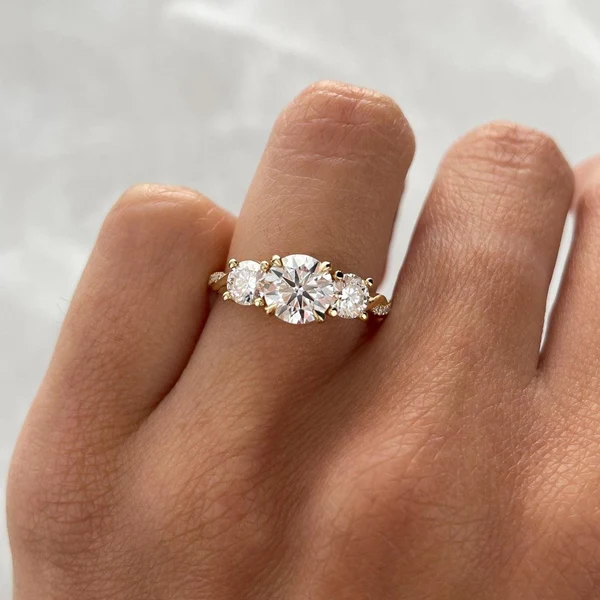
Choosing a three diamond engagement ring gives you plenty of room to make the design feel personal. While some couples prefer three matching diamonds, others like the idea of combining different shapes. A round center stone with pear-shaped side stones, for example, can create a look that feels more personal than a ring made with three identical diamonds.
But mixing diamond shapes also brings a few questions. Will the stones look balanced? Should one diamond be larger than the others? Which shapes work well together?
The good news is that there are no strict rules. The key is knowing how different shapes work together before choosing your final design.
Why Mix Different Diamond Shapes?
Three matching diamonds create a neat and consistent appearance. Mixing shapes gives the ring more personality and lets you highlight different parts of the design.
A mixed-shape ring can also help you combine diamonds that have different visual qualities. A round diamond may draw attention to the center, while pear or marquise stones can add length to the overall design.
For someone who wants a ring that feels less predictable, this can be a great choice.
It can also be meaningful. You might choose one shape that represents you and another that represents your partner, with the center diamond bringing the two together.
Which Diamond Shapes Work Well Together?
Not every combination will have the same effect. Some shapes naturally complement each other because of their proportions and outlines.
Round and Pear
A round center diamond with pear-shaped side stones is one of the easiest combinations to work with. The round center provides a strong focal point, while the pointed ends of the pear stones add direction to the design.
This combination can also make the ring appear longer across the finger without requiring extremely large diamonds.
Oval and Marquise
Oval and marquise diamonds both have elongated outlines, so they can create a coordinated look even though their shapes are different.
An oval center stone can provide a softer appearance, while marquise side stones add sharper points. The result can feel distinctive without looking disconnected.
Emerald and Round
If you prefer clean lines, an emerald-cut center stone with round side diamonds can be an interesting choice. The straight edges of the emerald cut contrast with the curved outline of the round stones.
Because these shapes look quite different, keeping the setting simple can help the stones feel connected.
Cushion and Pear
A cushion-cut center diamond has soft corners and a fuller shape. Pairing it with pear-shaped side stones creates a noticeable contrast between the center and sides.
This can work especially well when the side stones are kept slightly smaller so the center remains the main focus.
How to Keep Different Shapes Balanced
Mixing shapes does not mean every stone needs to compete for attention. Balance is what makes the design work.
Choose a Clear Center Stone
In most three-stone designs, the center diamond is the main feature. When using different shapes, make sure there is a clear reason for the center stone to stand out.
You can do this through size, shape, or both. A larger center diamond with smaller side stones is a simple approach.
Pay Attention to Proportions
The diamonds do not need to be the same size, but their proportions should make sense together.
For example, very wide side stones may overpower a narrow center diamond. Likewise, extremely thin side stones can make a large center stone look disconnected.
Ask to see the stones together before making a final decision. Looking at each diamond separately can make it difficult to judge how they will appear as a group.
Consider the Direction of the Stones
Some diamond shapes naturally point toward the center. Pear and marquise diamonds can be positioned with their points facing inward or outward, creating very different looks.
Try both options if your jeweler allows it. A small change in direction can completely change the appearance of the ring.
Should the Stones Be the Same Color?
Diamond color is another detail worth considering when mixing shapes.
Ideally, the stones should have similar color grades so one diamond does not look noticeably warmer or cooler than the others. This becomes especially important when the diamonds sit close together.
The same idea applies to clarity. Small differences may not be obvious, but choosing stones with similar visual qualities can help the finished ring look more unified.
Think About the Setting Too
The setting plays a major role in bringing different diamond shapes together.
A simple metal band can let the diamond shapes do most of the work. Prong settings are also useful when you want the individual outlines of the stones to remain visible.
You should also consider how the stones sit next to each other. If there are large gaps between them, the design may look less connected. If they sit too closely, some shapes may hide part of another stone.
A good jeweler can help adjust the spacing and angle of each diamond.
Is a Mixed-Shape Ring Right for You?
The best choice depends on what you want your ring to say about you.
If you love symmetry and consistency, three matching diamonds may be the better option. If you enjoy different details and want something that feels more personal, mixing shapes can be worth considering.
Browse three stone engagement rings to see different ways three diamonds can be arranged and styled before deciding on your favorite combination.
Antiquecut offers designs that can help you explore different three-stone arrangements, making it easier to think about the shape, setting, and overall feel you want.
Final Thoughts
Yes, you can absolutely mix diamond shapes in a three diamond engagement ring. In fact, using different shapes can give the ring a stronger sense of personality.
The most important thing is balance. Think about the center stone, side-stone proportions, diamond color, setting, and direction of each shape. When these details work together, the ring can feel carefully designed rather than mismatched.
Take your time comparing combinations. Your engagement ring will carry a lot of meaning, so choosing a combination that feels right to you matters more than following a fixed rule.

 English
 Arabic
 French
 Spanish
 Portuguese
 Deutsch
 Turkish
 Italiano
 Russian
 Romaian
 Portuguese (Brazil)
 Greek
Greek
 Bengali