


Vedic Meditation: What It Is, Its Benefits, and How to Begin
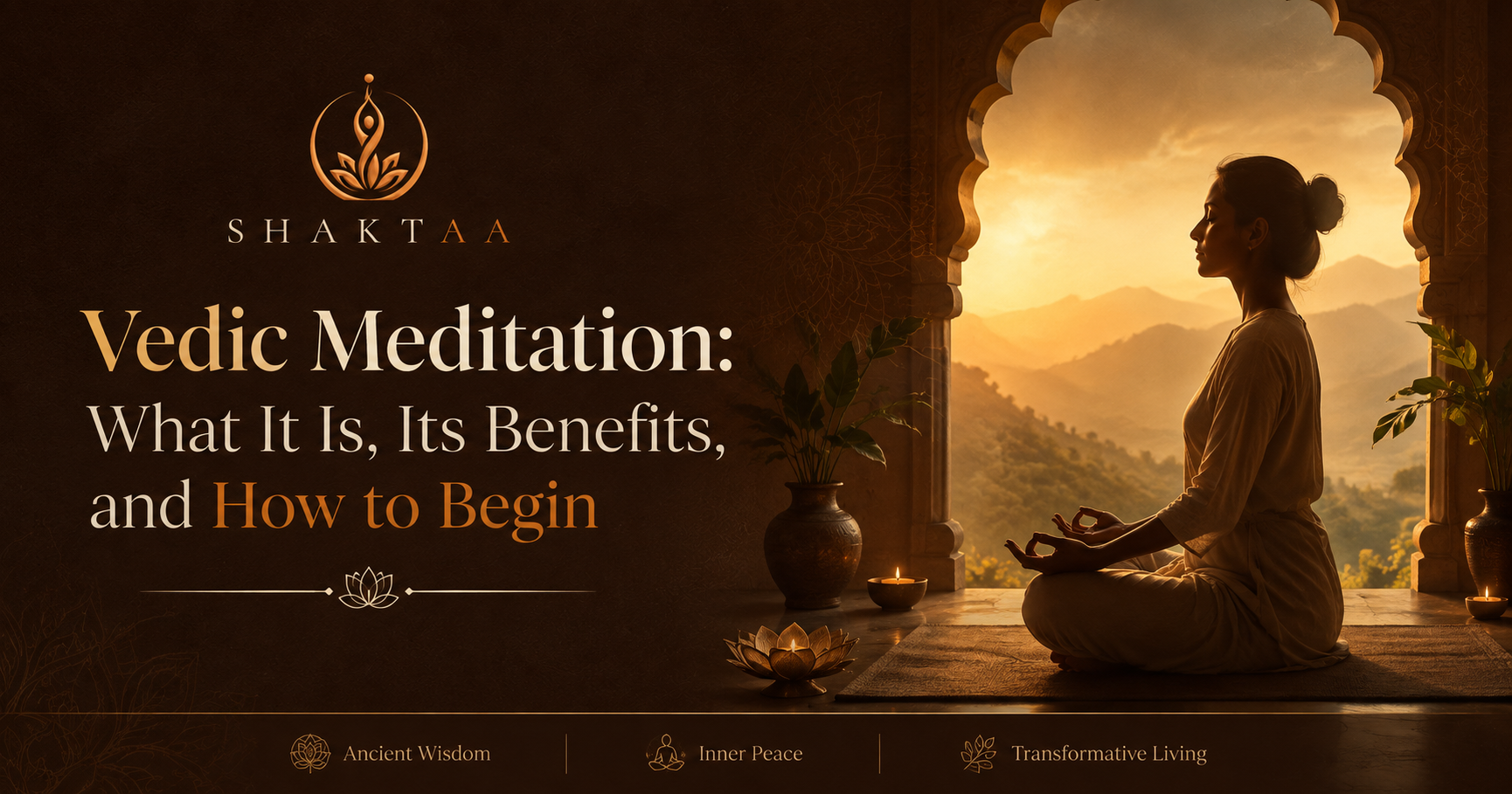
If you've tried meditation before and found yourself frustrated fighting your thoughts, forcing focus, feeling like you're "failing" at stillness Vedic Meditation might be the practice you haven't tried yet. Unlike many popular meditation styles that ask you to concentrate or observe, Vedic Meditation works through effortless mental settling, using a personal mantra instead of willpower.
What Is Vedic Meditation?
Vedic Meditation is a mantra-based meditation technique rooted in the ancient Indian Vedic tradition. Practitioners sit comfortably with eyes closed and silently repeat a personal mantra not to concentrate on it, but to let the mind settle inward naturally, without effort or control.
Key characteristics of Vedic Meditation include:
-
A personal, effortless mantra — not chanted aloud, not used for focus
-
No attempt to stop or control thoughts — thoughts are allowed to come and go
-
Practiced twice daily — typically for 15–20 minutes, morning and afternoon/evening
-
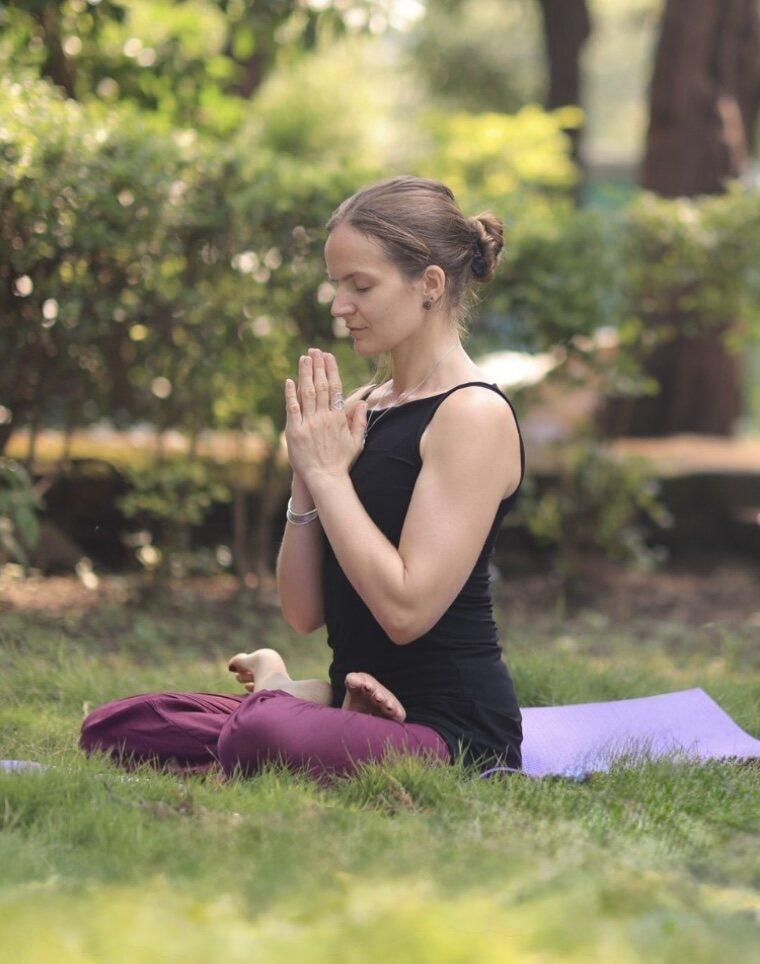
Eyes closed, seated comfortably — no special posture or environment required
-
Rooted in oral Vedic tradition — passed down through teacher-to-student lineages for generations
The word "Veda" itself means knowledge, and Vedic Meditation draws on this body of ancient Indian wisdom, later popularized in the West through the teachings of Maharishi Mahesh Yogi and the Transcendental Meditation movement.
The Benefits of Vedic Meditation
Because Vedic Meditation emphasizes rest over concentration, its benefits tend to center on deep physiological and mental recovery rather than sharpened attention alone. Commonly reported benefits include:
-
Deep physical and mental rest — often described as more restorative than a nap
-
Reduced stress reactivity — a calmer baseline response to daily pressures
-
Improved sleep quality — many practitioners report falling asleep more easily
-
Greater emotional balance — less reactivity, more steadiness through the day
-
A felt sense of inner stillness — without needing to "try" to feel calm
It's worth noting that meditation research broadly supports stress-reduction and relaxation benefits across mantra-based and mindfulness-based techniques, though effects can vary by individual and consistency of practice. As with any wellness practice, Vedic Meditation should complement — not replace — professional care for diagnosed mental health conditions.
Vedic Meditation vs. Mindfulness Meditation
These two practices are often used interchangeably, but they work quite differently:
|
Vedic Meditation |
Mindfulness Meditation |
|
|
Method |
Mantra-based, effortless settling |
Focused attention on breath/body/thoughts |
|
Origin |
Ancient Vedic tradition (India) |
Buddhist Vipassana tradition |
|
Effort level |
No active concentration required |
Requires returning attention repeatedly |
|
Typical practice |
Twice daily, eyes closed |
Varies — formal sittings or daily-life awareness |
|
Best suited for |
Deep rest, effortless practice |
Present-moment awareness, observation skills |
Neither approach is objectively "better" ; they simply serve different goals. Some practitioners even use both, depending on the moment: Vedic Meditation for structured daily rest, mindfulness for staying grounded during everyday tasks. For a deeper side-by-side breakdown of how these two traditions diverge and where they overlap, A Complete guide on Vedic Meditation vs. Mindfulness Meditation is a useful next read.
Where Do Vedic Meditation Mantras Come From?
A common misconception is that mantras can be picked from a public "Vedic Meditation mantras list" and self-selected. In authentic practice, mantras are typically given individually by a certified teacher, chosen based on the practitioner's background rather than a generic list. This personalization is considered part of what makes the technique effective — the mantra is meant to be subtle and personally resonant, not symbolically meaningful or translatable in the way some other mantra traditions use sound.
If you come across a public list of "Vedic meditation mantras," treat it as educational rather than a substitute for proper instruction from a trained teacher.
Is Vedic Meditation the Same as Transcendental Meditation?
Not exactly, though the two are closely related. Transcendental Meditation (TM) is a trademarked technique taught by organizations within the lineage of Maharishi Mahesh Yogi. "Vedic Meditation" is a broader, non-trademarked term used by independent teachers who teach mantra-based meditation within the same general tradition.
The mechanics are similar — personalized mantra, effortless technique, eyes-closed practice, twice-daily routine — but teachers, training, certification standards, and course structure can vary between the two.
How to Start a Vedic Meditation Practice
If you're new to Vedic Meditation, here's a realistic starting path:
-
Find a certified teacher — this practice is traditionally taught one-on-one or in small groups over several sessions, not learned from a video alone.
-
Expect a short course, not a single session — most teachers introduce the technique over 3–4 sessions across a few days.
-
Commit to twice-daily practice — consistency matters more than duration; 15–20 minutes twice a day is the traditional recommendation.
-
Consider a retreat setting — a Vedic meditation retreat can offer a more immersive introduction, often combined with other restorative practices like sound healing, which can deepen the initial learning experience.
-
Be patient with the process — unlike concentration-based techniques, progress here is often felt as depth of rest rather than a dramatic shift in focus.
Frequently Asked Questions
What are the main benefits of Vedic Meditation?
The primary benefits of vedic meditation include deep physical and mental rest, reduced stress reactivity, improved sleep, and greater emotional balance — achieved through effortless mantra-based practice rather than active concentration.
How is Vedic Meditation different from regular meditation?
"Regular meditation" often refers to mindfulness or concentration-based techniques, which require actively focusing attention and returning to it when the mind wanders. Vedic Meditation uses a mantra to let the mind settle inward without that active effort.
Do I need a specific mantra list to practice Vedic Meditation?
No. Authentic Vedic Meditation uses a mantra assigned individually by a certified teacher rather than one chosen from a public list. Public mantra lists can be informative but aren't a substitute for personalized instruction.
Can beginners practice Vedic Meditation?
Yes. It's specifically designed to be accessible without prior meditation experience, since it doesn't require concentration skills or the ability to "quiet the mind" before starting.
How long does it take to learn Vedic Meditation?
Most teachers introduce the technique over a short course of 3–4 sessions, often across consecutive days, followed by ongoing twice-daily independent practice.
Is Vedic Meditation the same as Transcendental Meditation?
They share the same underlying mechanics and Vedic lineage, but Transcendental Meditation is a specific trademarked program, while "Vedic Meditation" is a broader term used by various independent teachers.
Final Thoughts
Vedic Meditation offers a different entry point into meditation for anyone who has found concentration-based techniques exhausting rather than restful. Its effortless, mantra-based approach is less about controlling the mind and more about giving it permission to rest deeply — twice a day, without needing to get it "right."

 English
 Arabic
 French
 Spanish
 Portuguese
 Deutsch
 Turkish
 Italiano
 Russian
 Romaian
 Portuguese (Brazil)
 Greek
Greek
 Bengali