


How Does a Modular Cardiac Operation Theatre Reduce Infection Rates?
Introduction
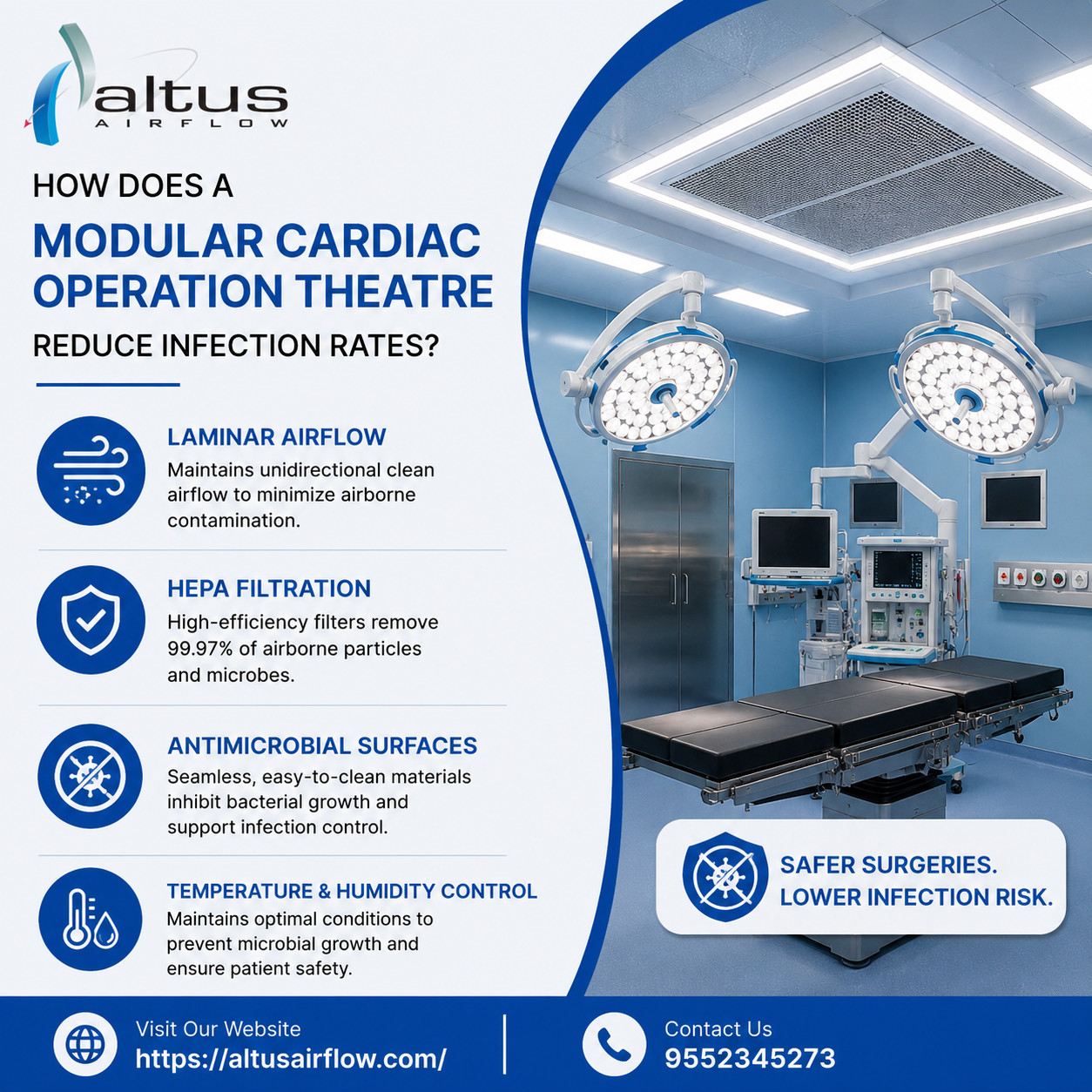
Modular Cardiac Operation Theatre technology plays an important role in creating controlled surgical environments where infection prevention is a major priority. Cardiac procedures require strict environmental control because patients undergoing heart surgery can be particularly vulnerable to infections. Modern modular operation theatres combine specialized wall and ceiling systems, advanced HVAC technology, HEPA filtration, controlled airflow, hygienic surfaces, and effective pressure management to minimize contamination risks. Altus Airflow provides engineered modular cardiac OT solutions that integrate these technologies to support cleaner, safer, and more efficient surgical environments.
Infection prevention inside an operation theatre depends on more than routine cleaning. Airborne particles, microorganisms, uncontrolled airflow, moisture, surface contamination, and poor maintenance can all affect the cleanliness of a surgical environment. A properly designed modular OT addresses these factors through coordinated engineering and construction systems.
This article explains how modular cardiac operation theatres help reduce infection risks and why their specialized infrastructure is important for modern cardiac surgery.
Why Infection Control Matters in Cardiac Surgery?
Cardiac surgeries are complex procedures that require a highly controlled environment. Any avoidable contamination can increase risks for patients and healthcare workers.
Important infection-control objectives include:
-
Reducing airborne contaminants
-
Maintaining clean surgical surfaces
-
Controlling temperature and humidity
-
Preventing uncontrolled air entry
-
Supporting effective cleaning
A specialized OT environment helps hospitals maintain these conditions consistently.
Controlled Airflow Management
One of the primary advantages of a Modular Cardiac Operation Theatre is controlled airflow management.
Airflow systems are designed to regulate how clean air enters, moves through, and exits the surgical area. Proper airflow helps reduce unnecessary turbulence and limits the movement of contaminated particles around the operating field.
Controlled airflow also supports stable pressure relationships between the theatre and adjacent areas, helping reduce the possibility of unwanted air infiltration.
Role of HEPA Filtration
HEPA filtration is a key component of infection-control infrastructure.
High-efficiency filters are used to remove very small airborne particles from the air supplied to the operating theatre. When correctly selected, installed, and maintained, HEPA filtration can significantly improve air cleanliness.
HEPA filtration helps:
-
Reduce airborne particulate loads
-
Support cleaner supply air
-
Improve environmental control
-
Protect the surgical environment
Filter performance should be verified through appropriate testing and maintenance procedures.
Laminar Airflow Technology
Laminar airflow systems are commonly considered for highly controlled surgical environments.
The system delivers filtered air in a carefully managed airflow pattern over the surgical area. This can help reduce turbulence and minimize the accumulation of airborne particles around critical areas.
For cardiac procedures, appropriate airflow design can contribute to a cleaner operating environment when combined with effective filtration, pressure control, and proper clinical protocols.
Positive Pressure Control
Maintaining appropriate positive pressure inside the operating theatre can help prevent contaminated air from entering from surrounding spaces.
When the theatre has a higher pressure than adjacent areas, air tends to move outward when doors or openings are present rather than allowing surrounding air to flow inward.
Pressure control therefore becomes an important part of the overall infection-prevention strategy.
Hygienic Wall Panel Systems
The walls of an operation theatre must be easy to clean and maintain.
Modular wall panels generally provide smooth, durable surfaces with fewer unnecessary joints and gaps than conventional construction. Properly sealed panel systems can reduce areas where dust and contaminants may accumulate.
Healthcare-grade wall panels can provide:
-
Smooth surfaces
-
Easy cleaning
-
Chemical resistance
-
Durable finishes
-
Improved hygiene
Correct installation and sealing are essential for achieving the intended performance.
Seamless Ceiling Construction
Ceiling systems also contribute to infection control.
A properly designed modular ceiling minimizes exposed gaps and unnecessary openings. It can accommodate HEPA filtration modules, lighting fixtures, airflow components, and other OT services while maintaining a controlled environment.
A well-integrated ceiling system simplifies cleaning and supports the overall integrity of the operating theatre.
Easy-to-Clean Flooring
Operation theatre flooring is exposed to frequent cleaning and disinfection.
Healthcare-grade flooring is selected for properties such as:
-
Seamless installation
-
Chemical resistance
-
Durability
-
Easy cleaning
-
Anti-static performance
Properly installed flooring minimizes dirt accumulation and supports routine infection-control procedures.
Temperature and Humidity Control
Temperature and humidity influence both patient comfort and the operating environment.
An appropriately designed HVAC system helps maintain stable environmental conditions. Excessive humidity can contribute to moisture-related problems, while inappropriate temperature conditions can affect comfort and equipment performance.
Consistent environmental control therefore supports the broader infection-prevention strategy.
Reduced Dust Accumulation
Traditional construction methods can create joints, cracks, and irregular surfaces that are difficult to clean.
Modular construction uses engineered panels and coordinated components to create more controlled interior surfaces. Reduced dust accumulation makes routine cleaning more effective.
This is particularly valuable in cardiac OTs, where cleanliness must be maintained throughout the operating schedule.
Hermetically Sealed Doors
Specialized doors help preserve the controlled environment.
Hermetically sealed doors can minimize air leakage around the door perimeter and support pressure management. Automatic opening and closing mechanisms can also reduce unnecessary handling.
These doors are particularly useful where maintaining environmental separation between the OT and surrounding areas is important.
Better Air Pressure Monitoring
Modern operation theatres can incorporate digital pressure monitoring systems.
These systems provide information about:
-
OT pressure
-
Adjacent room pressure
-
Airflow conditions
-
System performance
Continuous monitoring can help staff identify environmental deviations quickly and initiate corrective action.
Integration of HVAC and Filtration
Infection control depends on the interaction of multiple systems rather than one individual technology.
HVAC systems, HEPA filters, airflow distribution, pressure control, and temperature management must be appropriately coordinated.
A well-engineered system ensures that these components operate together instead of functioning as isolated installations.
Improved Cleaning and Disinfection
The physical design of a modular OT can make routine cleaning more efficient.
Smooth surfaces, sealed joints, hygienic flooring, and accessible equipment arrangements reduce obstacles for housekeeping teams.
Effective cleaning protocols remain essential because engineering controls alone cannot eliminate all infection risks.
Workflow and Zoning
Efficient OT planning can help separate different activities within the surgical environment.
Proper zoning can reduce unnecessary movement and help organize:
-
Sterile supplies
-
Surgical equipment
-
Staff circulation
-
Patient movement
-
Waste handling
Reduced unnecessary movement can contribute to better infection-control practices.
Reduced Cross-Contamination Risks
Cross-contamination can occur when contaminants are transferred between surfaces, equipment, people, and different areas.
A well-designed Modular Cardiac Operation Theatre supports infection prevention through controlled circulation, hygienic surfaces, airflow management, and appropriate separation of functional areas.
However, these engineering measures must be supported by staff hygiene, sterilization, PPE, and hospital infection-control policies.
Environmental Monitoring
Environmental monitoring provides valuable information about operating conditions.
Modern systems can monitor:
-
Temperature
-
Humidity
-
Pressure
-
Air quality parameters
Monitoring allows facility teams to identify deviations and maintain consistent conditions.
Equipment Placement
Equipment positioning can influence cleaning and airflow.
Strategic placement ensures that:
-
Critical equipment remains accessible
-
Cleaning teams can reach surfaces
-
Airflow pathways are not unnecessarily obstructed
-
Staff movement is organized
Proper planning contributes to both efficiency and hygiene.
Validation and Testing
After installation, OT systems should be tested and validated according to applicable project requirements and healthcare protocols.
Testing may include:
-
HEPA filter integrity testing
-
Airflow measurements
-
Pressure verification
-
Temperature and humidity checks
-
Environmental performance assessments
Validation helps confirm that the installed systems perform as intended.
Maintenance and Filter Replacement
Infection-control performance depends on regular maintenance.
Maintenance activities may include:
-
HVAC inspection
-
HEPA filter assessment
-
Door seal inspection
-
Pressure monitoring
-
Surface maintenance
-
Airflow verification
Following manufacturer recommendations and facility maintenance schedules helps preserve system performance.
Supporting Infection-Control Protocols
Engineering systems are only one part of infection prevention.
Hospitals must also maintain:
-
Hand hygiene procedures
-
Sterilization protocols
-
Appropriate PPE usage
-
Equipment disinfection
-
Staff training
-
Environmental cleaning
The best results are achieved when infrastructure and clinical protocols work together.
Energy-Efficient Infection-Control Infrastructure
Modern engineering can combine infection control with energy efficiency.
Efficient HVAC equipment, intelligent controls, optimized airflow, and LED lighting can help reduce unnecessary energy consumption without compromising required environmental conditions.
This creates a more sustainable operating theatre infrastructure.
Long-Term Benefits for Hospitals
Investing in specialized OT infrastructure can provide long-term advantages.
These include:
-
Improved environmental control
-
Better infection prevention
-
Easier maintenance
-
Enhanced surgical workflow
-
Greater infrastructure reliability
A properly designed OT also provides flexibility for future equipment and technology upgrades.
Why Specialized Design Matters?
A Modular Cardiac Operation Theatre requires coordination between architecture, HVAC engineering, airflow management, electrical systems, medical gases, filtration, and infection-control requirements.
Specialized design ensures that the different components work together effectively. This integrated approach can help hospitals maintain a controlled environment while supporting the demands of complex cardiac procedures.
Conclusion
A modular cardiac operation theatre can help reduce infection risks by combining controlled airflow, HEPA filtration, pressure management, hygienic modular wall and ceiling systems, easy-to-clean flooring, temperature and humidity control, sealed doors, environmental monitoring, and systematic validation. These engineering measures create a more controlled surgical environment and support the hospital's broader infection-prevention program.
Altus Airflow develops modular cardiac operation theatre solutions that integrate cleanroom engineering, HVAC systems, airflow management, HEPA filtration, and healthcare-grade modular infrastructure. Altus Airflow helps healthcare facilities create efficient and controlled surgical environments designed around patient safety, infection prevention, and long-term operational performance.
FAQs
1. How does a Modular Cardiac Operation Theatre reduce infection rates?
A Modular Cardiac Operation Theatre helps reduce infection risks through controlled airflow, HEPA filtration, positive pressure, hygienic wall and ceiling panels, seamless flooring, temperature and humidity control, sealed doors, environmental monitoring, and effective validation and maintenance.
2. How does HEPA filtration help prevent infections?
HEPA filters remove a high proportion of airborne particles from supplied air, helping maintain cleaner operating environments.
3. Why is positive pressure important in an operation theatre?
Positive pressure helps limit the entry of potentially contaminated air from surrounding areas.
4. Do modular wall panels improve hygiene?
Yes. Smooth, sealed, easy-to-clean wall surfaces can reduce dust accumulation and simplify disinfection.
5. Does laminar airflow reduce airborne contamination?
Properly designed laminar airflow can reduce turbulence and help control airborne particles around critical surgical areas.
Read Our Previous Blog ---------------> How do Turnkey Modular IVF Lab Solutions improve energy efficiency?

 Arabic
 French
 Spanish
 Portuguese
 Deutsch
 Turkish
 Dutch
Dutch
 Italiano
 Russian
 Romaian
 Portuguese (Brazil)
 Greek
Greek
 Bengali