


How Fine Art Scanning Helps Create Museum-Quality Prints
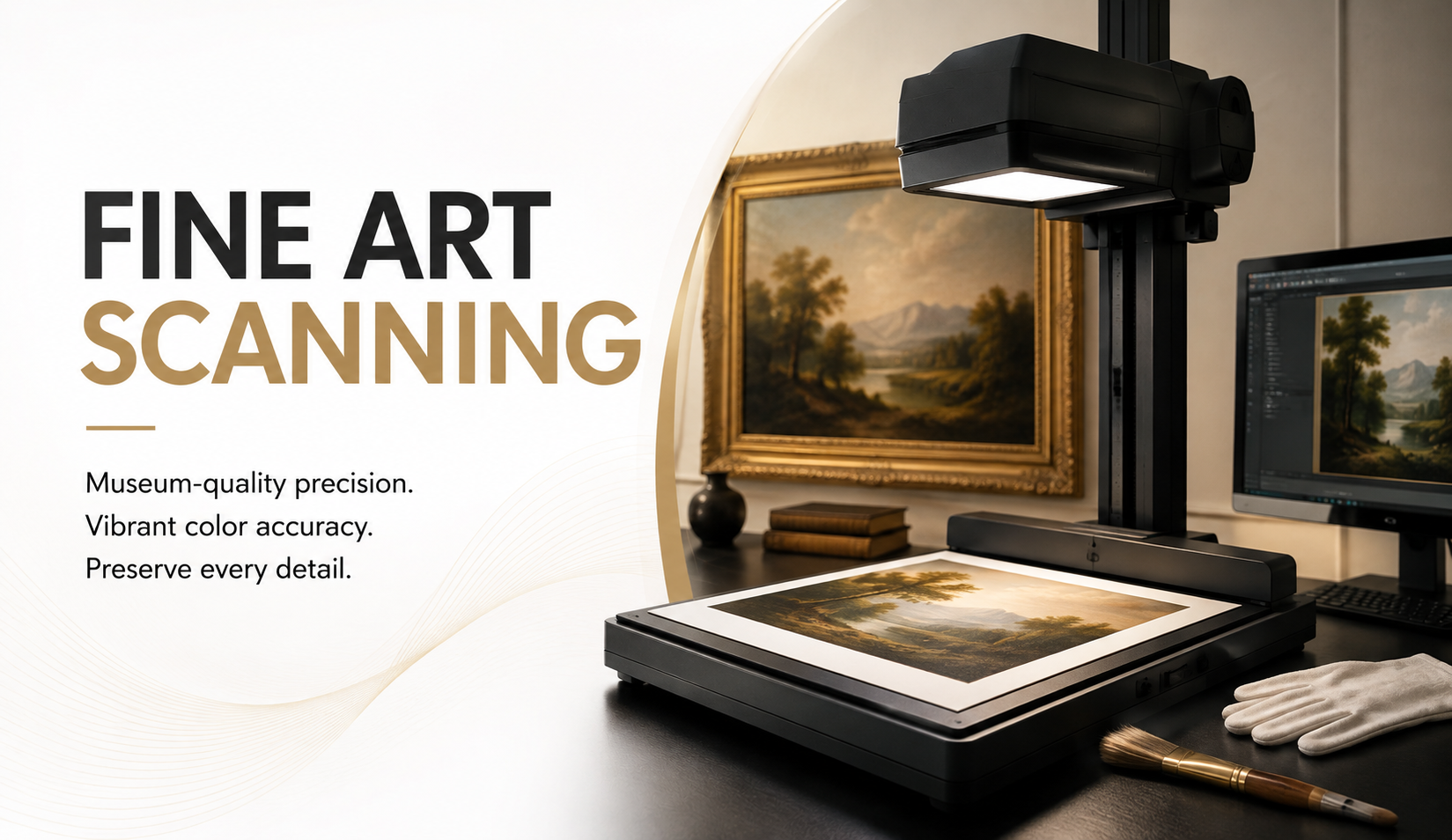
We often meet artists who feel hesitant to sell their original work because they fear they will never see that level of detail again. When you spend weeks perfecting a specific gradient or texture, a standard photograph often feels like a betrayal of your effort. Professional Fine Art Scanning changes this dynamic by creating a digital twin that carries the weight and depth of the physical piece. This process allows you to sell the original while retaining a high-fidelity asset for future sales.
Many business owners make the mistake of using a high-end smartphone or a basic office scanner to digitize their inventory. While these tools work for administrative tasks, they fail to capture the subtle nuances of professional artwork. We see colors shift, highlights blow out, and textures disappear when creators skip the professional capture stage. Museum-quality prints require a foundation built on precision, lighting control, and high-bit-depth data.
The Critical Role of High-Resolution Data Capture
Quality reproductions begin with the sheer volume of information the scanner gathers from the original surface. A standard scan might capture enough data for a small postcard, but it will fall apart if you try to scale it up for a gallery wall. We use large-format sensors that record every minute detail, from the weave of the canvas to the individual hairs of a brushstroke. This high resolution ensures that the final print looks indistinguishable from the original at any distance.
When we talk about museum-quality, we refer to the "optical' resolution rather than digital interpolation. Some software "guesses" pixels to make an image larger, which leads to a soft, blurry appearance. We avoid this by capturing the true optical data from the start, providing a crispness that holds up under close inspection. This level of clarity gives collectors the confidence to purchase a print, knowing it reflects your true craftsmanship.
Why Dynamic Range Dictates Print Quality
Dynamic range describes the scanner's ability to see detail in the darkest shadows and the brightest highlights simultaneously. We often see DIY scans where the dark areas of a painting turn into flat, black "mud." Our professional scanning systems utilize a high dynamic range to pull subtle details out of those deep tones. This ensures that the reproduction maintains the same mood and atmosphere as the original painting.
Avoiding Common Lighting Pitfalls
Standard lighting creates glare on varnished surfaces or uneven shadows on textured paper. We utilize specialized lighting arrays that bathe the artwork in perfectly balanced, polarized light. This technique eliminates distracting reflections and ensures that the colors remain consistent from the top left corner to the bottom right. Without this controlled environment, your digital file will likely suffer from "hot spots" that ruin the professional look of the print.
Bridging the Gap Between Digital Files and Physical Ink
A perfect scan only fulfills half of the requirements for a museum-quality reproduction. We must also translate that digital data into physical ink on a premium substrate. This transition requires a sophisticated understanding of color management and material science. We match the digital color profile of the scan to the specific ink and paper combination used in the final print run.
We frequently advise our clients to consider the tactile experience of the final product. While the scan captures the visual information, the finish of the print dictates how a buyer interacts with it. For instance, choosing between soft touch vs gloss lamination can drastically change the perceived value of a print. A velvet-like finish might enhance a delicate watercolor, whereas a high-gloss finish could make a vibrant abstract piece feel more modern.
The Importance of Archival-Grade Materials
Museums require prints to last for decades without fading or yellowing. We pair our high-resolution scans with pigment-based inks and acid-free papers to meet these standards. Unlike dye-based inks found in home printers, pigment inks resist UV light and moisture. When we combine a professional scan with these archival materials, we create a product that collectors can pass down through generations.
Managing Color Consistency Across Editions
Consistency remains one of the biggest challenges for artists who sell limited edition prints. If you sell ten prints today and ten more in six months, they must look identical. We save our scan data with embedded color profiles so that every subsequent print run matches the first. This technical discipline protects your brand reputation and ensures that every customer receives the same high quality.
Best Practices for Preparing Your Artwork for Scanning
We recommend a few simple steps to ensure we get the best possible result from your original piece. First, always ensure the artwork is completely dry; fresh oil paint can off-gas or smear during the handling process. We also suggest cleaning the surface of any dust or loose debris using a soft, dry brush. These small preparations prevent permanent "digital dust" from appearing in your high-resolution files.
Another practical tip involves scanning the work before you apply a final heavy gloss varnish if possible. While we can manage reflections with polarized light, a matte or satin surface usually yields the most accurate color data. If you have already varnished the piece, do not worry; our professional equipment can still handle the challenge. We simply prefer the cleanest possible surface to maximize the clarity of the underlying pigments.
Building a Sustainable Art Business Through Digitization
Professional scanning empowers you to move beyond the "one-and-done" sales model of original artwork. By creating a library of museum-quality digital assets, you open up multiple revenue streams simultaneously. You can offer various sizes, media types, and price points to reach a broader audience of collectors. We help our clients transition from hobbyists to professional business owners by providing the technical foundation they need to scale.
Digital files also serve as a vital insurance policy for your creative career. Physical art remains vulnerable to environmental damage, theft, or accidents. When we digitize your portfolio, we provide you with peace of mind. Even if the original piece leaves your studio, you still possess the ability to reproduce and share that vision with the world.
At Laguna Digital, we treat every piece of art with the reverence it deserves. We understand that your work is more than just an image; it is a culmination of your time, skill, and passion. Our team utilizes the latest scanning technology and color-matching techniques to ensure your reproductions meet the highest gallery standards. We invite you to reach out and learn how our professional services can help you preserve your legacy and grow your business through high-quality art reproduction.

 Arabic
 French
 Spanish
 Portuguese
 Deutsch
 Turkish
 Dutch
Dutch
 Italiano
 Russian
 Romaian
 Portuguese (Brazil)
 Greek
Greek
 Bengali