


How Senior Care Software Creates Better Care Through Smarter Documentation
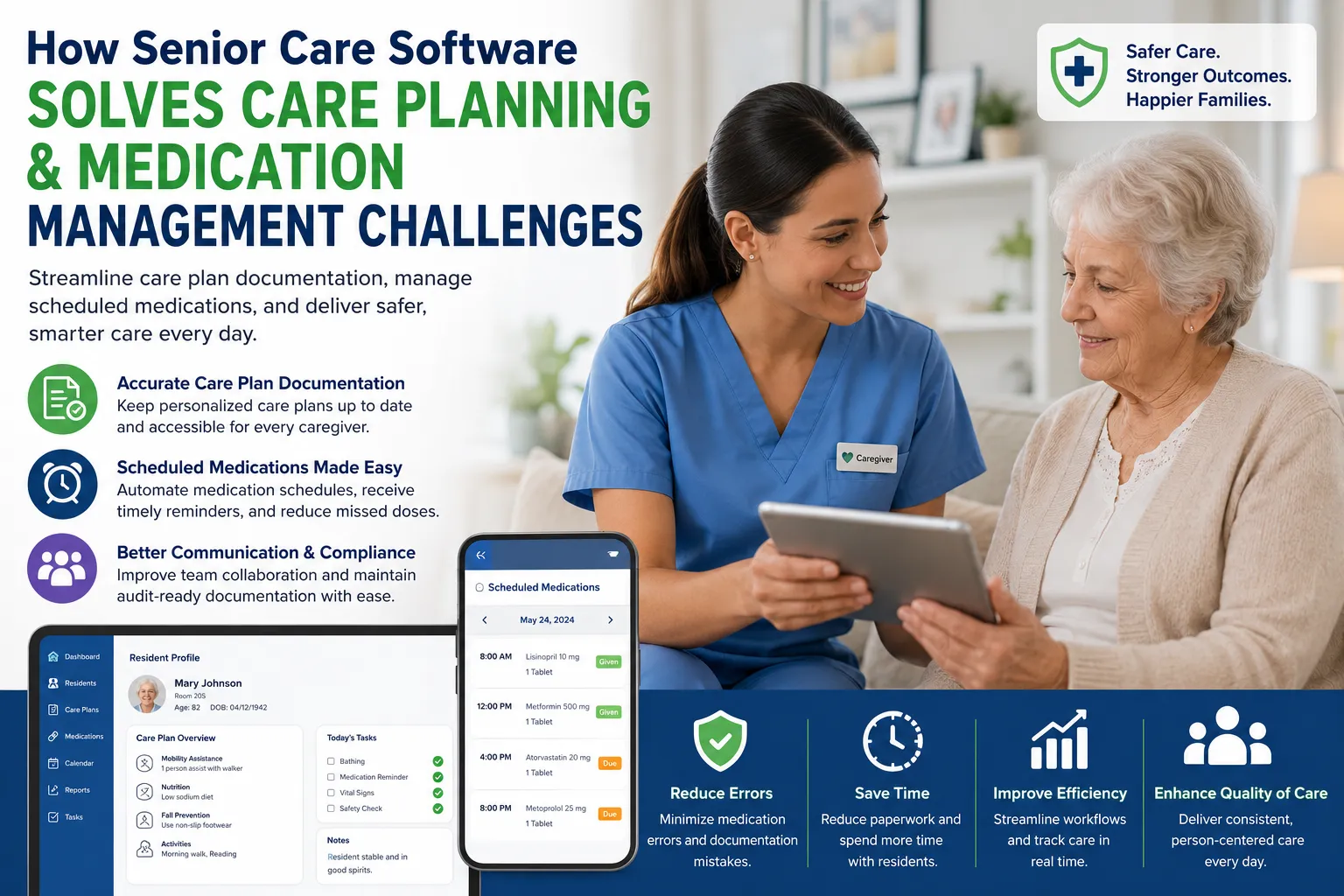
Providing quality care for older adults requires accurate information, efficient communication, and well-organized daily operations. As assisted living communities, home care agencies, and senior living providers serve more residents, managing records on paper or across multiple systems becomes increasingly difficult.
Missed updates, inconsistent documentation, and delayed communication can affect care quality and place unnecessary pressure on caregivers. This is where senior care software becomes a valuable solution. By centralizing resident information and simplifying daily caregiver notes, organizations can improve collaboration, reduce administrative work, and focus more on delivering personalized care.
This guide explains how modern care management technology helps solve common operational challenges while supporting caregivers, administrators, residents, and families.
Why Care Teams Need Better Digital Tools
Senior care professionals manage dozens of responsibilities every day. From documenting care activities to monitoring medications and updating care plans, every task requires accuracy.
Without a centralized system, organizations often experience:
- Duplicate documentation
- Communication gaps between shifts
- Lost or incomplete records
- Delayed resident updates
- Time-consuming paperwork
- Difficulty tracking care history
- Limited reporting capabilities
These issues can slow workflows and make it harder for caregivers to provide consistent support.
Digital solutions eliminate many of these problems by bringing essential information into one secure platform.
What Is Senior Care Software?
Senior care software is a comprehensive care management platform designed for assisted living facilities, nursing homes, memory care communities, adult day centers, and home healthcare organizations.
Instead of relying on multiple disconnected tools, providers can manage important information from a single dashboard, including:
- Resident profiles
- Individual care plans
- Medication administration records
- Staff scheduling
- Incident documentation
- Wellness tracking
- Compliance reports
- Family communication
- Care history
- Activity records
Having centralized information helps staff make informed decisions quickly while reducing administrative workload.
Why Daily Caregiver Notes Matter
Every caregiver interaction provides useful insight into a resident's health and well-being. Small observations often reveal important changes that deserve attention.
Well-maintained daily caregiver notes help record information such as:
- Appetite changes
- Mobility improvements
- Sleep quality
- Mood and emotional well-being
- Medication reminders
- Personal care assistance
- Social engagement
- Hydration monitoring
- Behavioral observations
- Family interactions
These records create a complete timeline of resident care, allowing future caregivers to understand recent updates before beginning their shift.
How Digital Documentation Improves Accuracy
Digital documentation simplifies note-taking without sacrificing quality.
Real-Time Record Updates
Instead of waiting until the end of a shift, caregivers can record observations immediately using smartphones, tablets, or computers.
This helps preserve important details while reducing forgotten information.
Standardized Care Records
Built-in templates ensure caregivers document consistent information during every shift.
Standardized documentation makes reports easier to review and supports better care planning.
Secure Information Access
Authorized staff can instantly review resident updates whenever needed.
This improves communication between caregivers, nurses, administrators, and care coordinators.
Reduced Administrative Burden
Automation minimizes repetitive paperwork, allowing caregivers to spend more time assisting residents instead of completing forms.
Benefits for Care Providers
Healthcare organizations adopting digital care management often notice improvements across multiple areas.
Better Care Coordination
Every team member works from the same resident information, reducing misunderstandings and improving collaboration.
Faster Decision-Making
Immediate access to documentation helps supervisors identify concerns before they become larger problems.
Improved Compliance
Accurate digital records simplify audits, inspections, and regulatory reporting.
Higher Productivity
Automated workflows reduce manual data entry and administrative delays.
Stronger Resident Relationships
With less time spent on paperwork, caregivers have more opportunities to provide meaningful, person-centered care.
Features That Support Everyday Care
Choosing the right software means selecting tools that simplify both clinical and administrative responsibilities.
Useful features include:
Personalized Care Plans
Customized care plans help ensure every resident receives services based on their individual needs and preferences.
Medication Tracking
Medication schedules, reminders, and administration records improve accuracy while supporting resident safety.
Resident Progress Monitoring
Digital tracking allows caregivers to document health trends and identify gradual changes over time.
Task Management
Daily care activities can be assigned, monitored, and completed through one centralized system.
Reporting Dashboard
Administrators gain valuable insights into staffing, documentation completion, resident care trends, and operational performance.
Secure Family Updates
Some platforms provide communication tools that help families stay informed about their loved one's care.
Supporting Caregiver Success
Caregivers perform demanding work that requires attention, compassion, and efficiency.
Technology should simplify their responsibilities rather than create additional complexity.
Senior care software helps caregivers by:
- Reducing repetitive documentation
- Simplifying daily routines
- Improving communication between shifts
- Organizing resident information
- Supporting better time management
- Increasing confidence through accurate records
When caregivers have reliable information available, they can focus on delivering high-quality care instead of searching for paperwork.
Tips for Choosing the Right Solution
Not every organization has the same operational requirements.
Before selecting a platform, consider whether it offers:
- Easy navigation
- Mobile accessibility
- Cloud-based access
- Customizable documentation templates
- Secure resident records
- Care plan management
- Staff scheduling
- Reporting tools
- Compliance support
- Integration with existing healthcare systems
Selecting scalable software helps organizations continue growing without replacing their technology later.
Best Practices for Implementation
Successful implementation requires preparation and ongoing improvement.
Healthcare organizations should:
- Train employees before launching the platform.
- Create standardized documentation procedures.
- Encourage caregivers to complete notes immediately after care.
- Review reports regularly for quality improvement.
- Collect staff feedback to refine workflows.
- Keep resident information updated and accurate.
A structured implementation plan helps maximize the long-term value of the software.
Looking Ahead
As demand for senior care services continues to grow, providers need reliable systems that improve efficiency without compromising personalized care.
Modern care management technology supports both clinical excellence and operational performance. By simplifying documentation, improving communication, and organizing resident information, organizations can create safer, more responsive care environments.
Digital solutions also position providers for future growth while helping staff adapt to evolving regulatory and operational requirements.
Final Thoughts
Delivering exceptional senior care depends on accurate information, effective teamwork, and consistent documentation. Investing in senior care software enables organizations to streamline workflows, strengthen communication, and improve the overall quality of resident care.
Combined with detailed daily caregiver notes, caregivers gain valuable insights that support informed decisions, smoother shift transitions, and personalized care planning. As healthcare organizations continue modernizing their operations, adopting an integrated digital care solution is a practical step toward improving efficiency, enhancing resident experiences, and building a stronger foundation for long-term success.

 Arabic
 French
 Spanish
 Portuguese
 Deutsch
 Turkish
 Dutch
Dutch
 Italiano
 Russian
 Romaian
 Portuguese (Brazil)
 Greek
Greek
 Bengali