


When Can Ergenergy Flow Battery Factory Processes Ensure Ongoing Output Stability
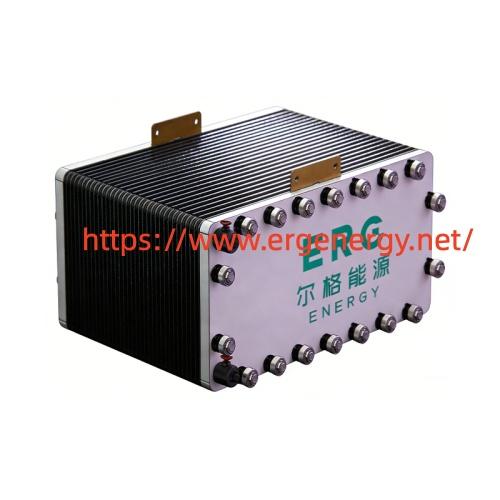
Flow Battery Factory production lines rely on modular station arrangements and automated sequences to achieve steady results across shifts. Ergenergy applies these principles through carefully planned layouts that move components from preparation areas into stacking zones and then into verification stations. Linear configurations spanning thirty to fifty meters allow materials to progress in one direction while multiple work points handle longer duration tasks such as pressing and sealing. Parallel identical lines can operate side by side when higher volumes are required so that overall capacity scales without redesigning the core process.
Clean and temperature controlled zones are limited to the stacking segment where precision matters most. Once the core unit is sealed the remaining steps continue in standard workspace conditions which lowers infrastructure demands. Robotic systems equipped with high resolution cameras guide the placement of plates membranes and gaskets with repeat positioning accuracy measured in fractions of a millimeter. Vision tools also inspect adhesive paths and surface conditions in real time rejecting any item that falls outside set tolerances before it advances.
Pressure application stations combine hydraulic force with electronic regulation so that each stack receives the same compression profile. Integrated leak detection follows immediately afterward simulating operational conditions to confirm seal integrity. Data from every station feeds into a central management platform that records parameters such as force temperature and timing. Operators can review trends and make minor adjustments before deviations grow large enough to affect later stages.
Recipe storage software stores layer counts adhesive routes and pressure values for different unit sizes. Changeovers become rapid because the system recalls the correct sequence and updates robot paths without manual recalibration. Rotary conveyors and lifting devices keep materials circulating efficiently between stations while minimizing floor space requirements. Manual tasks remain only for auxiliary part fitting after the automated core is complete reducing physical strain and variation introduced by hand work.
Throughput targets are supported by cycle times that range from roughly one hour on fully automated setups to four hours on mechanized versions depending on the level of human assistance. Daily operating windows of eight to twenty hours over three hundred days per year produce predictable annual volumes. Building requirements stay modest with heights around six meters floor loading capacity of one tonne per square meter and power loads under eighty kilowatts for typical lines.
Quality consistency arises from closed loop feedback rather than end of line sampling alone. Inline sensors track coating uniformity if electrode preparation occurs upstream and confirm dimensional accuracy at every transfer point. Thermal and pressure tests at the conclusion of assembly verify that completed units meet performance windows before packaging. Because each step is logged the entire history of a unit remains available for review if field questions arise later.
Scaling occurs by adding identical line modules rather than enlarging single stations beyond practical limits. This approach keeps maintenance routines standardized and spare parts inventories manageable. Training focuses on a limited set of station types so that operators can move between lines with minimal additional instruction. Material staging areas feed the start of each line in timed intervals that match the slowest station cycle preventing bottlenecks or idle waiting.
Ergenergy incorporates these line characteristics into the energy storage systems it supplies so that customers receive units produced under controlled and documented conditions. The same monitoring tools that guide assembly also generate the records that accompany each shipment. Continuous refinement of station timing and sensor thresholds further reduces scrap rates over successive production runs.
Teams evaluating long duration storage options benefit from understanding how such line designs translate into product uniformity. The combination of robotic precision environmental control and real time data creates a foundation for reliable output that supports project schedules. Further details on available systems appear at https://www.ergenergy.net/product/ where specifications and configuration options can be reviewed directly.

 Arabic
 French
 Spanish
 Portuguese
 Deutsch
 Turkish
 Dutch
Dutch
 Italiano
 Russian
 Romaian
 Portuguese (Brazil)
 Greek
Greek
 Bengali