


The 3D Data Boom: Key Drivers of Terrestrial Photogrammetry Software Market Growth
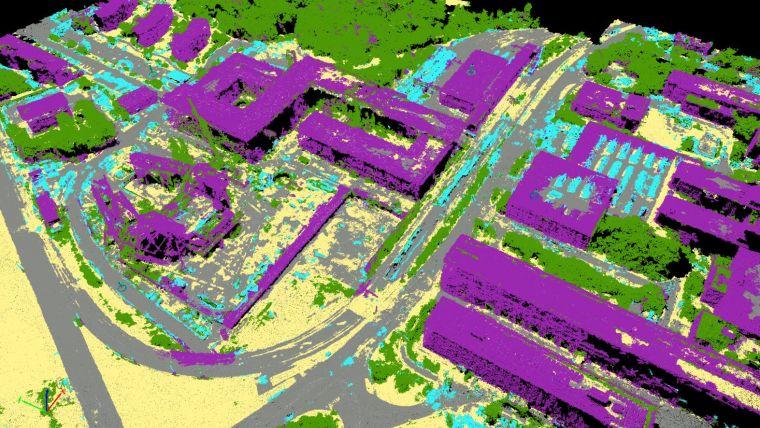
The global market for terrestrial photogrammetry software is experiencing a period of significant and sustained expansion, propelled by a powerful convergence of technological advancements and a growing demand for high-fidelity 3D data. A primary force behind the Terrestrial Photogrammetry Software Market Growth is the democratization of high-quality data capture hardware. In the past, photogrammetry required specialized and expensive metric cameras. Today, the quality of commercially available DSLR and mirrorless cameras has improved dramatically, while their prices have fallen. More importantly, the cameras embedded in modern smartphones have become incredibly powerful, capable of capturing the high-resolution, data-rich images needed for photogrammetry. This means that a powerful 3D data capture device is now in the pocket of billions of people. This accessibility has lowered the barrier to entry, allowing a much broader range of professionals and hobbyists—from small architectural firms to individual artists—to experiment with and adopt photogrammetry. This explosion in the availability of suitable input devices has massively expanded the potential user base and is a fundamental driver of the software market's growth.
Another major catalyst for growth is the increasing computational power available in standard desktop and laptop computers. The complex algorithms used in photogrammetry, particularly the dense cloud generation and meshing stages, are extremely computationally intensive. A decade ago, processing a large project could take days or even weeks on a standard computer. However, the rapid advancements in multi-core CPUs and, more critically, the massive parallel processing power of modern graphics processing units (GPUs), have slashed these processing times. Software vendors have heavily optimized their algorithms to leverage GPU acceleration, allowing a project that once took days to now be completed in a matter of hours. This dramatic increase in processing speed has made photogrammetry a much more practical and viable tool for time-sensitive commercial projects, removing one of the major historical bottlenecks to its adoption and making it a more competitive alternative to other 3D capture methods.
The widespread adoption of Building Information Modeling (BIM) in the architecture, engineering, and construction (AEC) industry is another powerful and specific market driver. BIM is a process that involves creating and managing a digital representation of the physical and functional characteristics of a place. There is a huge and growing need to create accurate "as-built" BIM models of existing structures for renovation and retrofit projects. Terrestrial photogrammetry has emerged as a highly effective and cost-efficient method for capturing this as-built data. A contractor can quickly capture the current state of a construction site with a series of photos, and the software can generate a 3D model that can be compared against the original design BIM model to check for deviations and track progress. This integration with the BIM workflow provides clear, quantifiable value, improving accuracy, reducing rework, and enhancing collaboration among project stakeholders, thereby driving significant adoption of photogrammetry software within the massive AEC sector.
Finally, the market's growth is being supercharged by the insatiable demand for realistic 3D content from the entertainment and e-commerce industries. The video game and visual effects (VFX) industries are constantly pushing for greater realism. Photogrammetry provides a fast and efficient way to create hyper-realistic 3D assets—from rocks and trees to entire buildings and props—by capturing them from the real world. This is often faster and more cost-effective than creating these assets from scratch by a 3D artist. The rise of e-commerce has also created a new demand for 3D product visualization. Brands are increasingly looking to provide customers with interactive 3D models of their products online, allowing them to view an item from any angle. Terrestrial photogrammetry offers a scalable method for capturing these product scans. As the metaverse and AR/VR applications continue to develop, the need for a massive library of high-quality 3D content to populate these virtual worlds will explode, positioning photogrammetry software as a key enabling technology for the next generation of digital experiences.
Top Trending Reports:

 Arabic
 French
 Spanish
 Portuguese
 Deutsch
 Turkish
 Dutch
Dutch
 Italiano
 Russian
 Romaian
 Portuguese (Brazil)
 Greek
Greek
 Bengali