


EU Fulfilment Centre: The Key to Smarter Ecommerce Operations in Europe
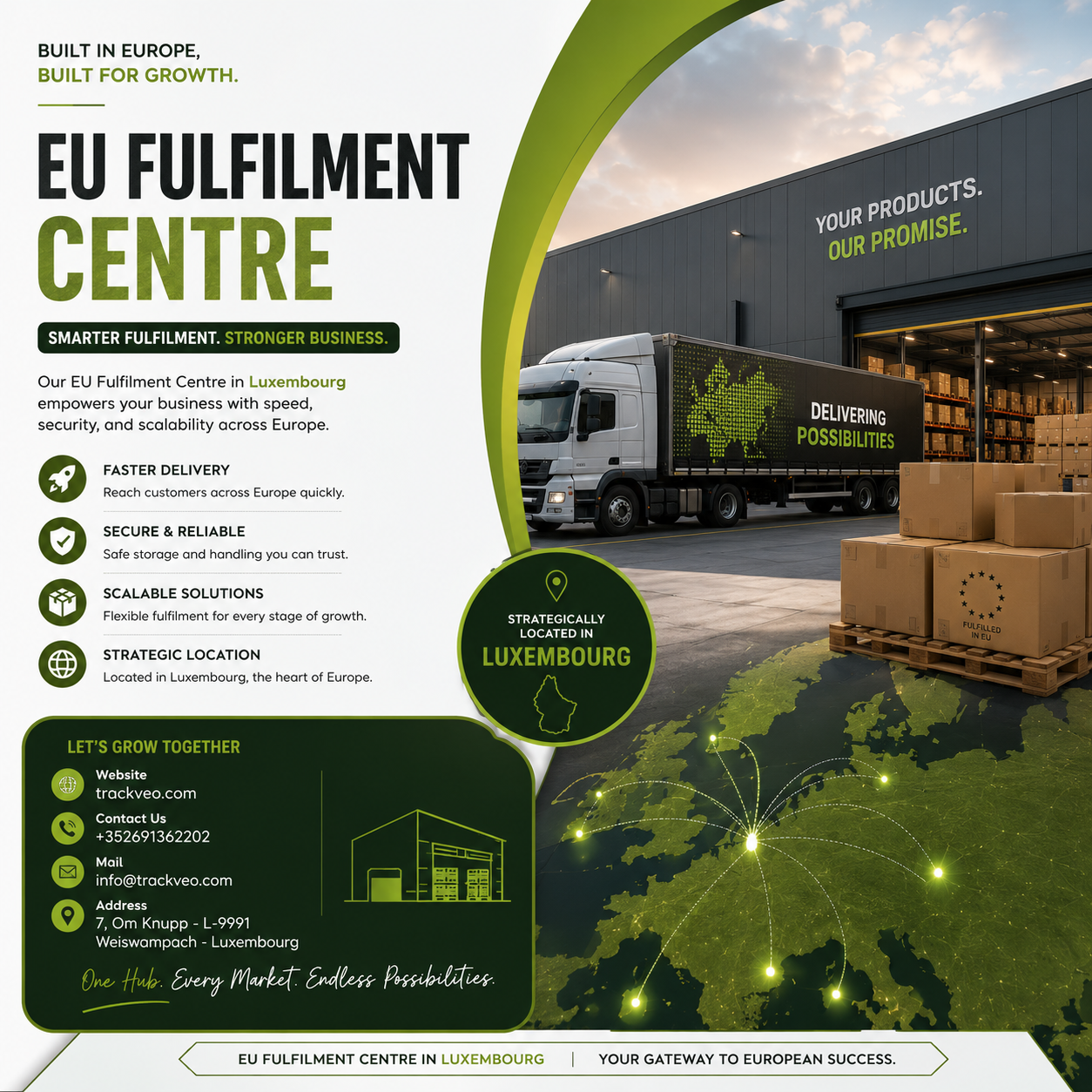
Breaking into the European ecommerce market requires businesses to deliver more than quality products. Customers expect dependable shipping, accurate order processing, and consistent service regardless of where they place an order. Meeting these expectations demands a logistics model that can efficiently manage storage, fulfillment, transportation, and returns. An effective EU Fulfilment Centre gives businesses the operational capability to manage these essential functions while supporting expansion into multiple European markets.
Why Efficient Fulfillment Creates a Competitive Edge
In today's ecommerce environment, logistics directly influence customer satisfaction and business performance. Delayed deliveries, inventory shortages, and inaccurate shipments can quickly impact a company's reputation. Businesses that invest in efficient fulfillment processes are better equipped to maintain service quality while adapting to changing market demands.
A well-structured fulfillment operation helps businesses:
-
Improve order accuracy
-
Increase delivery reliability
-
Optimize warehouse productivity
-
Strengthen inventory control
-
Support multi-channel selling
-
Enhance customer confidence
These improvements contribute to a smoother buying experience and stronger operational stability.
Building a Flexible Warehouse Infrastructure
Warehousing is far more than storing products on shelves. It serves as the operational center where inventory is received, organized, processed, and prepared for shipment.
Designing Efficient Warehouse Workflows
An organized warehouse layout reduces unnecessary movement and improves picking efficiency. Products should be stored according to demand frequency, product size, and handling requirements to create a logical workflow.
Clear operational procedures also help maintain consistency across receiving, storage, picking, packing, and dispatch activities.
Maintaining Inventory Accuracy
Accurate inventory records help businesses make informed purchasing decisions while preventing overselling or stock shortages.
Best practices include regular inventory audits, automated stock updates, inventory forecasting, and synchronized stock levels across ecommerce platforms. These methods provide greater visibility throughout the supply chain and support reliable order fulfillment.
Improving Fulfillment Performance Through Automation
Technology continues to transform modern logistics. Automation allows businesses to reduce manual tasks while improving speed and operational accuracy.
Warehouse Management Systems (WMS) and integrated order management solutions can automate inventory updates, generate shipping labels, assign picking tasks, and provide real-time reporting.
Automation also supports scalability by enabling fulfillment teams to manage higher order volumes without significantly increasing operational complexity.
Delivering Better Customer Experiences
Customer satisfaction extends well beyond the checkout page. Every interaction after an order is placed contributes to the overall shopping experience.
Businesses can improve customer satisfaction by focusing on:
-
Fast order confirmation
-
Accurate picking and packing
-
Reliable shipping partners
-
Transparent delivery tracking
-
Responsive returns management
Managing Returns Efficiently
An organized returns process helps businesses recover inventory quickly while maintaining positive customer relationships.
Clear return instructions, prompt inspections, efficient inventory updates, and timely customer communication reduce delays and improve operational efficiency.
Analyzing return trends also helps identify opportunities to improve product quality, packaging, or product descriptions.
Strengthening European Supply Chain Operations
Operating across multiple European countries requires careful planning and continuous coordination. Businesses benefit from logistics strategies that improve visibility while minimizing unnecessary transportation costs.
Key considerations include:
-
Strategic warehouse locations
-
Multi-carrier shipping options
-
Real-time shipment monitoring
-
Supply chain collaboration
-
Performance measurement
Businesses that monitor logistics performance regularly can respond faster to changing customer expectations and market conditions.
Choosing a Logistics Partner That Supports Long-Term Growth
Selecting a fulfillment provider should involve evaluating operational expertise, warehouse capabilities, technology integration, scalability, and service quality.
A reliable logistics partner becomes an extension of the business, helping improve operational efficiency while supporting future expansion.
Trackveo provides fulfillment solutions designed to simplify warehousing, inventory management, order fulfillment, and European logistics. By combining practical industry knowledge with scalable operational support, Trackveo enables ecommerce businesses to strengthen their supply chain while remaining focused on sustainable growth.
Conclusion
Building a successful ecommerce business in Europe requires logistics systems that combine efficiency, flexibility, and continuous improvement. Businesses that invest in organized warehousing, accurate inventory management, dependable fulfillment processes, and optimized transportation networks create stronger foundations for long-term success. Implementing a strategic EU Fulfilment Centre allows companies to enhance operational performance, improve customer satisfaction, and adapt confidently to future market opportunities. Supported by the fulfillment expertise of Trackveo, businesses can develop resilient logistics operations that contribute to lasting ecommerce growth.
For Info
Website - https://trackveo.com/
Contact us - +352691362202
Mail - info@trackveo.com
Address : 7, Om Knupp - L-9991 Weiswampach - Luxembourg

 English
 Arabic
 Spanish
 Portuguese
 Deutsch
 Turkish
 Dutch
Dutch
 Italiano
 Russian
 Romaian
 Portuguese (Brazil)
 Greek
Greek
 Bengali