


Why the Best Replacement Windows for Texas Are Built for Extreme Climate Performance
Introduction: Texas Climate Demands More From Your Windows
Texas is not a state that goes easy on anything — including your windows.
From blistering West Texas heat that pushes past 110°F to Gulf Coast hurricanes, North Texas ice storms, and South Texas humidity that never seems to quit, windows in the Lone Star State face climate conditions that most manufacturers don't even consider when designing standard products.
That's exactly why choosing the best replacement windows for Texas isn't just about aesthetics or brand names. It's about selecting window systems that are specifically engineered to perform under the kind of extreme, year-round climate stress that Texas routinely delivers.
In this article, we'll break down exactly what separates an ordinary window from one built to thrive in Texas conditions — and why that difference matters enormously for your comfort, energy bills, and long-term home value.
Understanding Texas's Unique Climate Challenges
Before diving into window features, it's important to understand just how demanding Texas's climate actually is — because the numbers tell a striking story.
According to NOAA's Climate Data, Texas ranks among the top states for:
-
Extreme heat events — Dallas averages over 60 days per year above 95°F
-
High humidity — Houston's average relative humidity exceeds 75% throughout summer months
-
Severe weather frequency — Texas leads the nation in annual tornado occurrences and regularly faces hurricane-force wind events along its 367-mile Gulf Coast
Add to this the dramatic temperature swings in regions like El Paso and Amarillo — where summer highs and winter lows can differ by more than 80°F within the same year — and it becomes clear that Texas windows must handle an extraordinary range of stressors simultaneously.
Standard windows simply weren't designed for this. The best replacement windows for Texas are.
Feature #1: Advanced Low-E Glass Coatings for Heat Management
In any Texas climate conversation, solar heat gain is the starting point.
Low-Emissivity (Low-E) glass uses microscopically thin metallic coatings applied to the glass surface to reflect infrared heat while allowing visible light to pass through. This technology directly addresses Texas's biggest climate challenge — keeping solar heat outside where it belongs.
The Solar Heat Gain Coefficient (SHGC) measures how much solar radiation a window allows inside. For Texas's climate zone (predominantly IECC Climate Zones 2 and 3), the U.S. Department of Energy recommends windows with an SHGC of 0.25 or lower to minimize cooling loads effectively.
Windows with high-performance Low-E coatings can reduce solar heat gain by up to 70% compared to standard clear glass, according to Lawrence Berkeley National Laboratory research. For Texas homeowners running air conditioning for eight or more months annually, this translates directly into measurable, ongoing energy savings.
When evaluating the best replacement windows for Texas, Low-E glass isn't optional — it's foundational.
Feature #2: Multi-Pane Insulated Glass Units With Inert Gas Fills
Single-pane windows have no place in modern Texas homes. Even basic double-pane windows can fall short in extreme conditions without the right gas fill between the panes.
Argon and krypton gas fills replace the air between panes in quality insulated glass units (IGUs). These inert gases are denser than air, significantly reducing convective heat transfer through the window assembly. Krypton, while more expensive, performs even better in narrower gaps — making it ideal for slim, high-performance window profiles.
The National Fenestration Rating Council (NFRC) provides standardized performance ratings for windows, including U-Factor — which measures how well a window insulates. For Texas climates, an NFRC-certified U-Factor of 0.30 or lower is recommended for optimal year-round performance.
Triple-pane options are becoming increasingly popular in Texas's northern regions where winter temperatures drop significantly, providing an additional layer of insulation against cold snaps that the state's infrastructure has historically struggled to handle — as demonstrated during the devastating February 2021 winter storm that left millions without power.
Feature #3: Frame Materials Built to Withstand Thermal Expansion
Here's something many Texas homeowners don't consider: window frames expand and contract with temperature changes. In Texas, where a single day can see temperature swings of 30°F or more, this matters enormously.
Aluminum frames, once dominant in Texas construction, conduct heat efficiently — which is exactly what you don't want in a window frame. Aluminum's high thermal conductivity creates cold or hot spots at the frame edges, reducing overall window efficiency and comfort near the glass.
Modern best replacement windows for Texas typically feature:
-
Vinyl (uPVC) frames — Excellent insulators, resistant to moisture and warping, low maintenance, and cost-effective for most Texas applications
-
Fiberglass frames — Superior dimensional stability across extreme temperature ranges, with thermal expansion rates nearly identical to glass itself — reducing seal stress significantly
-
Composite frames — Combine the structural strength of wood with the weather resistance of vinyl or aluminum cladding
Fiberglass frames, in particular, are gaining significant traction among Texas homeowners and builders for high-performance applications. Studies by the Oak Ridge National Laboratory confirm that fiberglass frames outperform both vinyl and aluminum in long-term thermal performance and structural integrity under temperature extremes.
Feature #4: Impact Resistance and Wind Load Ratings for Storm Country
Texas sees more than its share of severe weather. The Gulf Coast faces hurricane threats annually, while inland regions contend with powerful thunderstorm winds and tornadoes.
Impact-resistant windows feature laminated glass — two or more glass layers bonded with a tough interlayer (typically polyvinyl butyral or PVB) that holds glass fragments together even when the pane is struck. This technology, originally developed for hurricane zones in Florida, is increasingly relevant across coastal and South Texas.
Beyond impact glass, wind load ratings measure a window's ability to resist pressure from high winds without failing. The International Building Code (IBC) and Texas Department of Insurance provide wind zone maps that outline minimum window performance requirements by county — requirements that quality replacement window manufacturers design their products to exceed.
For Texas homeowners in wind-prone areas, the best replacement windows for Texas aren't just energy performers — they're structural defenders.
Feature #5: Moisture and Humidity Resistance for Coastal and East Texas
High humidity doesn't just make summers uncomfortable — it actively attacks your windows over time.
Moisture infiltration causes:
-
Frame swelling and warping in wood-based systems
-
Seal degradation in poorly manufactured IGUs
-
Mold growth in wall cavities surrounding failed window installations
-
Hardware corrosion in coastal salt-air environments
The best replacement windows for Texas coastal and East Texas regions feature marine-grade hardware, moisture-resistant frame materials, and multi-point drainage systems that actively channel water away from the frame and sill.
Quality manufacturers test their window systems to AAMA (American Architectural Manufacturers Association) standards for water resistance — certifications that give Texas homeowners confidence that their windows can handle sustained rain events and high-humidity conditions without compromising performance.
Feature #6: ENERGY STAR Certification Specific to Texas Climate Zones
Not all ENERGY STAR certifications are equal. The program divides the United States into four climate zones, and windows certified for one zone may not perform optimally in another.
Texas spans multiple ENERGY STAR climate zones, with most of the state falling in the Southern Zone — which has specific requirements for SHGC and U-Factor that reflect the dominance of cooling loads over heating loads.
ENERGY STAR reports that certified windows in the Southern Zone can reduce household energy bills by an average of $126 to $465 per year compared to non-certified single-pane alternatives. For Texas homeowners, choosing windows that carry ENERGY STAR certification specifically validated for their climate zone is a critical purchasing decision.
The best replacement windows for Texas will always carry this certification — and reputable installers will confirm the appropriate zone rating before recommending products.
Why Professional Installation Matters As Much As the Window Itself
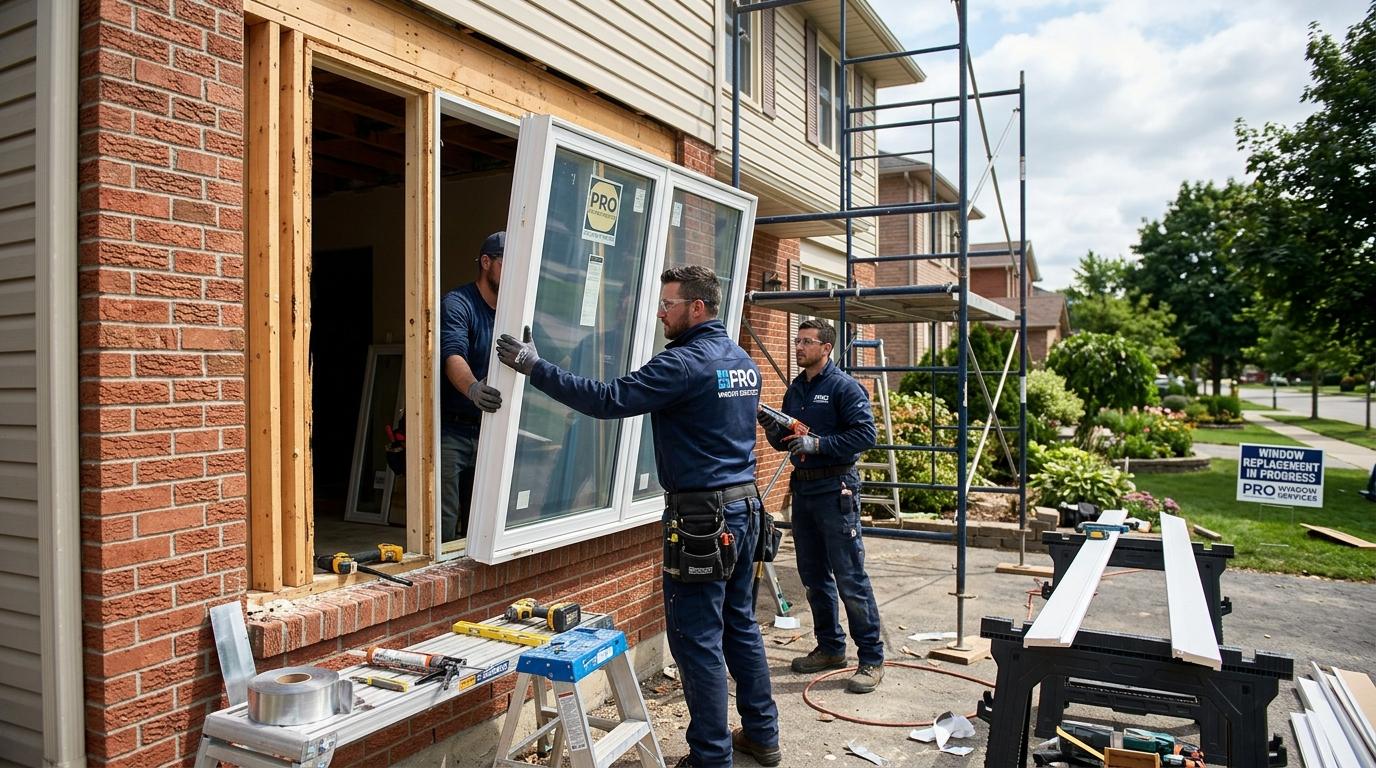
Even the highest-performing window fails if it's improperly installed. Air gaps around poorly seated frames, inadequate flashing, and incorrect caulking application can eliminate up to 50% of a window's rated performance, according to industry installation studies.
This is why partnering with experienced, Texas-based window professionals who understand local building codes, climate zone requirements, and proper installation protocols is just as important as selecting the right product.
Conclusion: Performance Is Not Optional in Texas
Texas doesn't offer its residents a mild, forgiving climate — and your windows shouldn't offer your home anything less than exceptional protection in return.
The best replacement windows for Texas are purpose-built for the state's extremes: engineered with advanced Low-E glass, high-performance gas fills, climate-appropriate frame materials, impact resistance, and moisture management systems that work together as a complete, integrated solution.
Choosing windows designed specifically for Texas conditions means lower energy bills, better indoor comfort, stronger storm protection, and a home that holds its value for years to come. In a state this demanding, settling for anything less simply isn't worth the risk.

 Arabic
 French
 Spanish
 Portuguese
 Deutsch
 Turkish
 Dutch
Dutch
 Italiano
 Russian
 Romaian
 Portuguese (Brazil)
 Greek
Greek
 Bengali