


Passive Firestopping UAE: A Guide to Getting It Right on Site
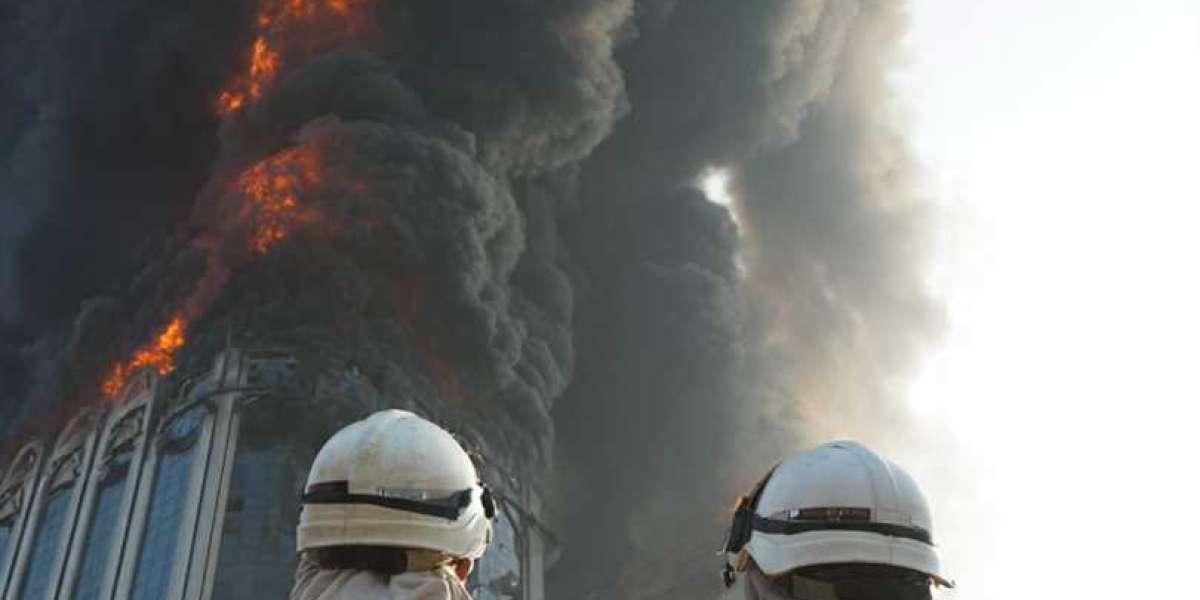
Every cable, pipe, and duct that punches through a fire-rated wall creates a hole in that wall's protection, and passive firestopping UAE projects rely on is the only thing closing that gap back up. It's one of the least visible systems in a building and one of the most consequential when it fails.
What Passive Firestopping Is For
Passive fire protection works without power, sensors, or human intervention. It's the fire-rated walls, floors, doors, and the sealing systems around every penetration through them, and its entire job is to hold a fire and its smoke in one compartment long enough for people to evacuate and firefighters to respond. Unlike a sprinkler or alarm system, nobody notices firestopping is there until an inspection finds it missing, or worse, until a fire finds the gap first. The systems themselves are tested in a furnace under standardised conditions, and that specific tested configuration- the wall type, the penetrating item, the exact product used to seal the gap- is what carries the fire rating. Change any one of those variables on site and the rating no longer applies, even if the finished result looks identical to the tested version.
Where Passive Firestopping UAE Systems Typically Fail
Most failures aren't dramatic. They're small, repeated gaps that add up.
• Cable trays and data penetrations sealed with the wrong fire-rated system, or not resealed after later cable additions
• Head-of-wall and floor-to-floor joints left untreated because they're not as obviously visible as a wall penetration
• Firestop products substituted on site without an engineering judgment confirming equivalence to the tested system
• Curtain wall perimeter fire containment gaps at the slab edge, which are easy to miss during a rushed inspection
Where Building Code Consultants Come In
Building code consultants set the compartmentation strategy long before a single seal gets installed. They determine which walls and floors need fire resistance ratings, specify the tested systems that apply to each penetration type, and coordinate with MEP designers so that trade drawings don't route a cable tray straight through a fire wall without a compliant detail already planned. When that coordination happens early, contractors have a clear reference to build against instead of improvising on site.
Verifying the System Actually Works
Specification is only half the job. Passive firestopping UAE regulations require independent third-party inspection precisely because a firestop that looks finished can still be the wrong product, the wrong thickness, or missing entirely behind a ceiling tile. An accredited inspector checks installed work against UL or FM-tested system data, confirms engineering judgments are properly documented where a non-standard condition applies, and flags anything that doesn't match before the space gets closed up for good.
Keeping Firestopping Effective After Handover
A building's fire compartmentation doesn't stay static once tenants move in.
• Any new cabling, plumbing, or renovation work that penetrates a rated wall needs to be resealed to the original tested system
• Facilities teams should keep firestop inspection records as part of the building's ongoing fire safety documentation
• Periodic re-inspection catches degradation or unauthorised modifications before they become a real gap
Conclusion
Passive firestopping UAE codes require isn't optional detailing; it's a core part of how a building actually protects the people inside it during a fire. Getting it right takes coordination between building code consultants who set the strategy at the design stage and independent inspectors who verify it before handover. It also takes discipline afterward, since a compartmentation strategy is only as strong as the least-protected penetration added five years after the ribbon-cutting. If your project's fire strategy treats firestopping as something the contractor will figure out later, that's the exact gap worth closing now.
FAQs
1. What's the difference between passive and active fire protection?
Passive systems, like fire-rated walls and firestopping, work automatically by containing fire and smoke without power or activation. Active systems, like sprinklers and alarms, detect a fire and respond to suppress it or alert occupants.
2. Can any fire-rated sealant be used for any penetration?
No. Firestop systems are tested and listed for specific combinations of wall type, penetrating item, and annular space. Using an unlisted product, or the right product outside its tested configuration, can void the fire rating.
3. Who typically pays for firestop remediation if an inspection fails?
The answer to this question normally lies in the construction contract, but ultimately the obligation rests upon the contractor who installed the cable improperly, because repairs can be classified as defect correction.
4. Does firestopping need to be reinspected after a building is occupied?
That said, any penetration that occurs after turnover, whether for installation of additional cables or for renovation, needs to be reinsulated and preferably re-inspected to preserve the original plan.

 Arabic
 French
 Spanish
 Portuguese
 Deutsch
 Turkish
 Dutch
Dutch
 Italiano
 Russian
 Romaian
 Portuguese (Brazil)
 Greek
Greek
 Bengali