


How does an IVF Lab Design Company ensure contamination control?
INTRODUCTION
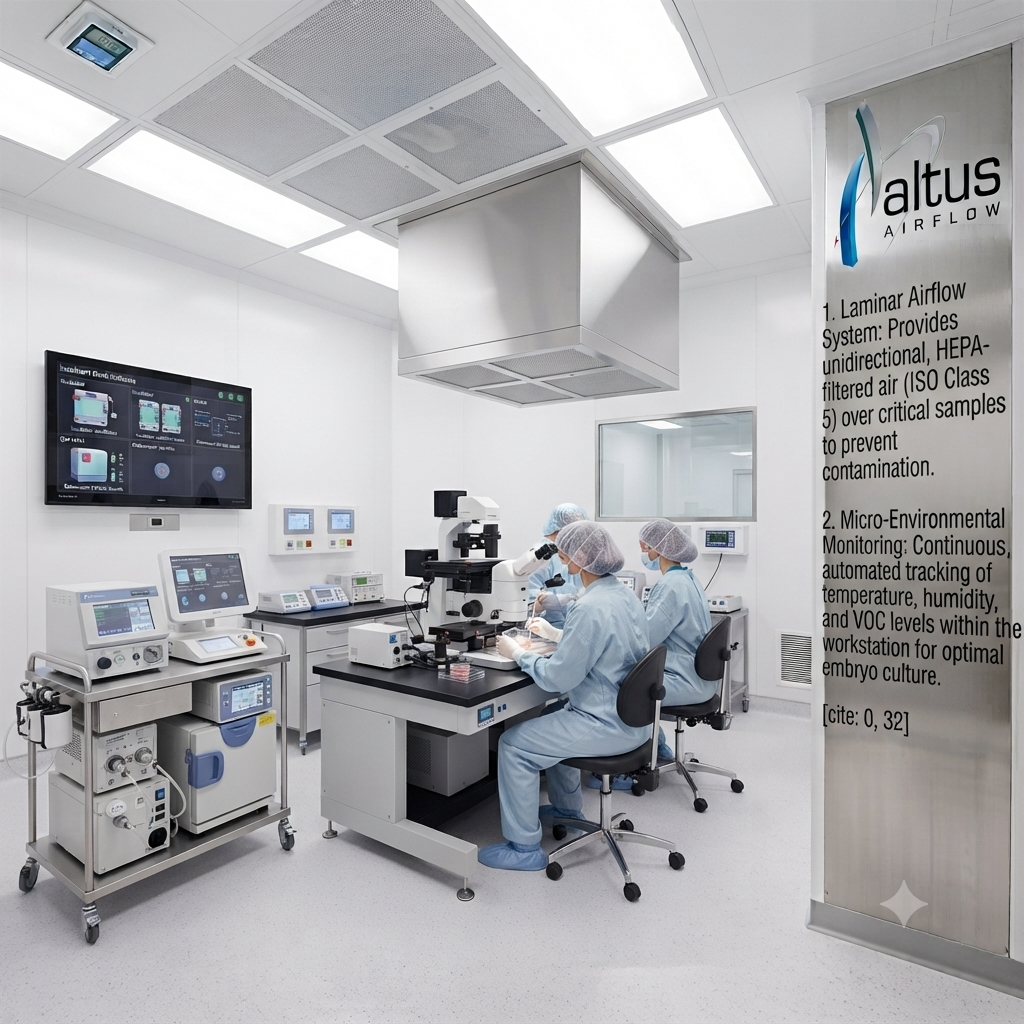
A professional IVF Lab Design Company plays a crucial role in creating a contamination-free environment where embryos, eggs, and sperm can be handled safely throughout assisted reproductive procedures. Since IVF laboratories deal with extremely sensitive biological materials, maintaining strict contamination control is essential for successful fertilization, embryo development, and positive clinical outcomes. Every aspect of laboratory planning—from cleanroom engineering and HVAC design to laminar airflow systems and material selection—is carefully designed to reduce airborne particles, microorganisms, volatile organic compounds (VOCs), and environmental fluctuations.
Modern IVF laboratories are built using advanced engineering principles that ensure stable environmental conditions while meeting healthcare regulations and laboratory standards. An experienced IVF Lab Design Company combines specialized infrastructure, contamination control technologies, and intelligent monitoring systems to create a highly controlled workspace that supports laboratory efficiency, embryo safety, and long-term operational reliability.
Why Contamination Control Is Critical in IVF Laboratories
Embryos are highly sensitive to even the smallest environmental changes. Airborne dust, bacteria, fungi, chemical vapors, and unstable temperature or humidity levels can negatively affect embryo development.
Effective contamination control helps:
- Protect embryos during culture
- Improve fertilization success
- Maintain stable laboratory conditions
- Reduce microbial contamination
- Increase laboratory efficiency
- Support regulatory compliance
- Improve treatment outcomes
For these reasons, contamination prevention is one of the primary objectives of every IVF laboratory.
Understanding Contamination Sources
Before implementing preventive measures, an IVF laboratory must identify potential contamination sources.
Common contamination sources include:
- Airborne particles
- Dust
- Bacteria
- Fungi
- Volatile organic compounds (VOCs)
- Poor ventilation
- Improper workflow
- Human activity
- Equipment emissions
- Construction materials
A well-designed laboratory minimizes these risks through engineering controls.
Cleanroom Engineering
One of the most effective methods for contamination control is cleanroom engineering.
A modern IVF laboratory incorporates:
- Controlled access zones
- Dedicated work areas
- Cleanroom construction
- Pressure-controlled rooms
- Smooth interior finishes
Cleanroom engineering reduces contamination while maintaining a stable working environment.
Laminar Airflow Systems
Laminar airflow is essential in embryology laboratories because it supplies filtered air in a smooth, unidirectional flow.
Benefits include:
- Continuous clean airflow
- Reduced airborne contamination
- Protection of embryos during handling
- Improved laboratory cleanliness
- Stable working conditions
Laminar airflow workstations are widely used for sensitive laboratory procedures.
High-Efficiency HEPA Filtration
HEPA filters remove up to 99.97% of airborne particles measuring 0.3 microns.
Their advantages include:
- Cleaner laboratory air
- Reduced microbial contamination
- Improved air quality
- Consistent filtration performance
- Long-term reliability
HEPA filtration forms the foundation of contamination control in IVF laboratories.
Advanced HVAC Systems
Specialized HVAC systems maintain stable environmental conditions throughout the laboratory.
These systems regulate:
- Temperature
- Humidity
- Air exchange rates
- Positive pressure
- Fresh air circulation
Proper HVAC design minimizes contamination while improving laboratory performance.
Positive Pressure Rooms
Positive air pressure prevents contaminated air from entering the laboratory.
Benefits include:
- Cleaner laboratory environment
- Protection against external contaminants
- Improved airflow control
- Enhanced sterility
Positive pressure is particularly important in embryo handling areas.
VOC Control Systems
Volatile Organic Compounds (VOCs) can negatively affect embryo development.
Modern laboratories reduce VOC exposure through:
- Low-emission construction materials
- Activated carbon filtration
- Fresh air ventilation
- Careful material selection
- Controlled chemical storage
VOC management contributes to healthier laboratory conditions.
Laboratory Zoning
A well-planned laboratory separates different functional areas to reduce cross-contamination.
Typical zones include:
- Sample receiving
- Semen processing
- Embryology laboratory
- Cryopreservation room
- Equipment storage
- Washing and sterilization area
Proper zoning supports efficient workflows while maintaining cleanliness.
Antimicrobial Construction Materials
An experienced IVF Lab Design Company selects materials that resist microbial growth and simplify cleaning.
Common materials include:
- Modular wall panels
- Chemical-resistant finishes
- Seamless flooring
- Moisture-resistant ceilings
- Easy-to-clean work surfaces
These materials help maintain long-term hygiene.
Seamless Flooring
Joint-free flooring reduces dust accumulation and bacterial growth.
Advantages include:
- Easy cleaning
- Chemical resistance
- Moisture protection
- Durable performance
- Improved hygiene
Seamless flooring is widely used in cleanroom environments.
Environmental Monitoring Systems
Continuous monitoring ensures laboratory conditions remain within acceptable limits.
Parameters monitored include:
- Temperature
- Humidity
- Carbon dioxide levels
- Air pressure
- VOC concentration
- Particle counts
Digital monitoring allows immediate corrective action if conditions change.
Equipment Placement and Workflow
Efficient laboratory layouts reduce unnecessary movement and contamination risks.
Equipment is strategically positioned to improve:
- Sample handling
- Embryologist workflow
- Sterile procedures
- Laboratory efficiency
Proper planning minimizes cross-contamination.
Controlled Access Systems
Limiting laboratory access reduces contamination from personnel movement.
Modern laboratories use:
- Restricted entry
- Access control systems
- Airlocks
- Gowning areas
- Standard operating procedures
Controlled entry supports cleanroom performance.
Sterile Utility Integration
Utilities are integrated to avoid contamination while ensuring operational efficiency.
These include:
- Electrical systems
- Gas pipelines
- Data connections
- Water supply
- Backup power
Proper utility planning supports uninterrupted laboratory operations.
Validation and Performance Testing
Before laboratory commissioning, comprehensive testing verifies system performance.
Testing includes:
- HEPA filter integrity testing
- Airflow testing
- Particle count testing
- Pressure differential testing
- HVAC validation
- Environmental monitoring verification
Validation confirms the laboratory meets design specifications.
Preventive Maintenance
Contamination control continues after installation through regular maintenance.
Routine services include:
- HEPA filter replacement
- HVAC servicing
- Airflow balancing
- Equipment calibration
- Environmental inspections
Preventive maintenance preserves long-term laboratory performance.
Staff Training
Personnel training is essential for maintaining contamination control.
Training typically covers:
- Laboratory hygiene
- Equipment operation
- Cleaning procedures
- Sample handling
- Emergency protocols
Proper training reduces human-related contamination risks.
Compliance with Industry Standards
A professional provider designs laboratories according to recognized healthcare and cleanroom standards.
Compliance focuses on:
- Cleanroom engineering
- HVAC performance
- Environmental monitoring
- Laboratory safety
- Quality management
Following recognized standards helps fertility clinics maintain consistent laboratory performance.
Benefits of Effective Contamination Control
A well-designed contamination control strategy provides several advantages:
- Better embryo protection
- Improved laboratory efficiency
- Stable environmental conditions
- Reduced infection risks
- Easier maintenance
- Enhanced workflow
- Long-term operational reliability
- Higher patient confidence
These benefits contribute to successful fertility treatments.
Future Technologies in Contamination Control
Modern IVF laboratories increasingly incorporate advanced technologies such as:
- AI-assisted environmental monitoring
- IoT-enabled laboratory systems
- Smart HVAC automation
- Predictive maintenance
- Digital quality management
- Energy-efficient cleanroom solutions
These innovations improve laboratory safety and operational efficiency.
Conclusion
An IVF Lab Design Company ensures contamination control through advanced cleanroom engineering, laminar airflow systems, HEPA filtration, specialized HVAC design, positive pressure ventilation, VOC management, intelligent environmental monitoring, efficient laboratory zoning, antimicrobial construction materials, and comprehensive validation procedures. By integrating these technologies into every stage of laboratory planning and construction, fertility clinics can create safe, stable, and contamination-controlled environments that support successful assisted reproductive procedures and long-term operational excellence. For reliable and future-ready IVF laboratory infrastructure, Altus Airflow provides comprehensive expertise and turnkey solutions.
Frequently Asked Questions
1. How does an IVF Lab Design Company control contamination?
An IVF Lab Design Company controls contamination through cleanroom engineering, HEPA filtration, laminar airflow systems, positive pressure ventilation, VOC control, environmental monitoring, and specialized HVAC systems.
2. Why is laminar airflow important in an IVF Lab Design Company project?
Laminar airflow installed by an IVF Lab Design Company provides a continuous flow of HEPA-filtered air that minimizes airborne particles and protects embryos during sensitive laboratory procedures.
3. Does an IVF Lab Design Company perform laboratory validation?
Yes. An IVF Lab Design Company performs airflow testing, HEPA filter integrity testing, particle count verification, HVAC validation, pressure testing, and environmental monitoring before laboratory handover.
4. What materials does an IVF Lab Design Company use to improve contamination control?
An IVF Lab Design Company typically uses antimicrobial modular wall panels, seamless flooring, moisture-resistant ceilings, chemical-resistant finishes, and easy-to-clean laboratory surfaces to maintain hygiene.
5. Does an IVF Lab Design Company provide maintenance after installation?
Yes. A professional IVF Lab Design Company usually offers preventive maintenance, HVAC servicing, HEPA filter replacement, environmental monitoring support, equipment calibration, and Annual Maintenance Contracts to maintain contamination control.
Read Our Previous Blog------>How does a Modular Ophthalmic OT Setup Company ensure infection control and sterility?

 Arabic
 French
 Spanish
 Portuguese
 Deutsch
 Turkish
 Dutch
Dutch
 Italiano
 Russian
 Romaian
 Portuguese (Brazil)
 Greek
Greek
 Bengali